
Scarlet
Kale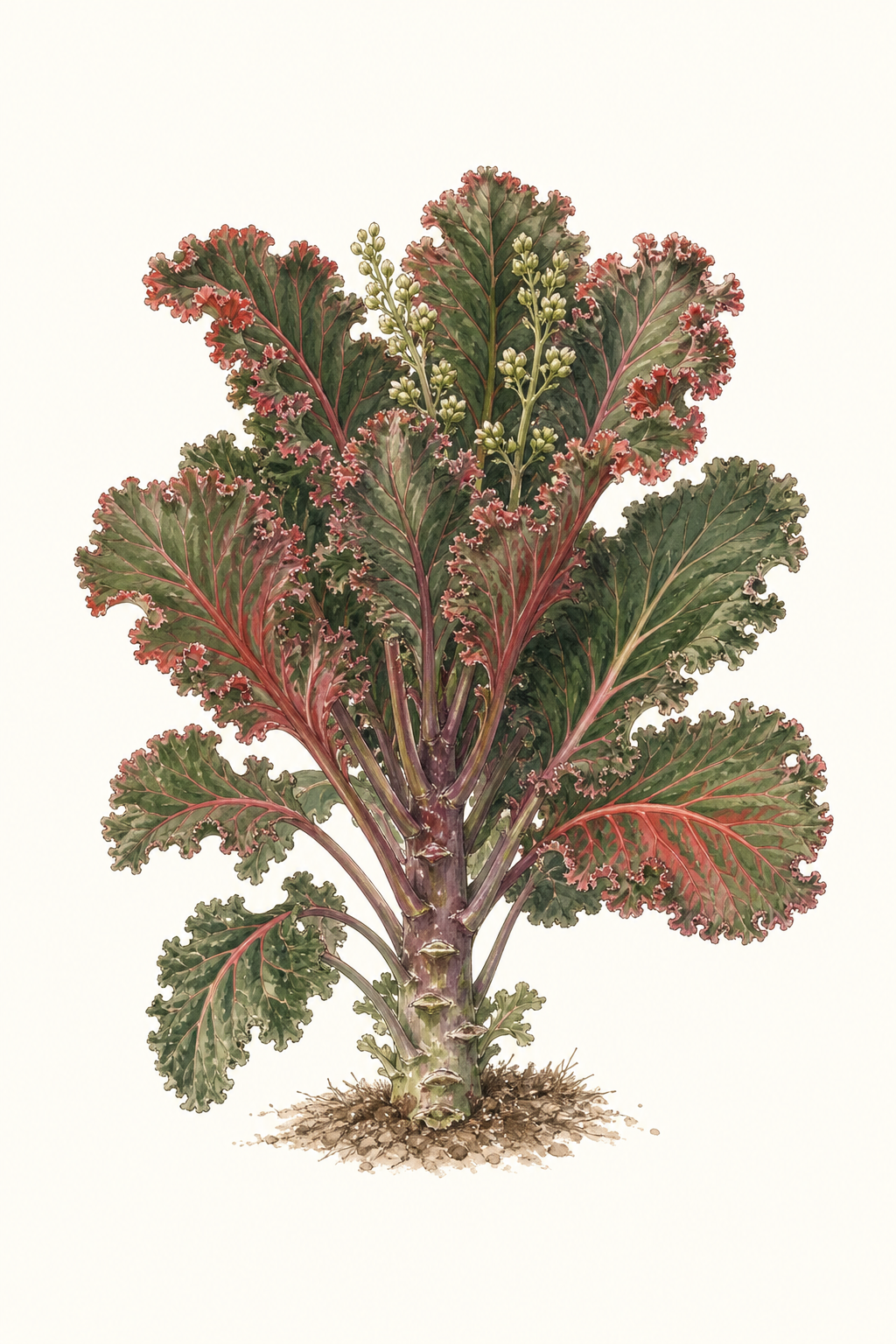
Velvety leaves unfurl in a dramatic scarlet-to-deep-green palette, with a crisp, tender bite that stays pleasantly sweet even as …
Crop Dates
| Milestone | Date |
|---|---|
| Start Indoors | Apr 10th |
| Last Frost | May 15th |
| Transplant / Sow Outdoors | May 15th |
| Harvest Begins | Jul 9th |
| Harvest Ends | Sep 1st |
Crop Details
| Trait | Value |
|---|---|
| Days to Maturity | 55 |
| Sun Requirements | Full Sun |
| Growth Habit | Rosette |
| Support Needed | None |
| Planting Depth | Normal |
| Germination Temp (°F) | 45 |
| Min Soil Temp (°F) | 40 |
| Min Night Temp (°F) | 30 |
| Harden Off (days) | 6 |
Recommended Companions
Frequently Asked Questions
What pest or disease is most likely on Brassica oleracea (scarlet), and how can I manage it?
How often should I water Brassica oleracea during the main growing phase?
How do I know when my Brassica oleracea (scarlet) is ready to harvest?
Velvety leaves unfurl in a dramatic scarlet-to-deep-green palette, with a crisp, tender bite that stays pleasantly sweet even as the weather cools. “Scarlet” kale forms an upright, richly textured rosette—boldly frilled edges and a lively sheen that makes every harvest feel like a garden triumph. Ideal for fresh salads and vibrant sautéed greens, it also shines in hearty braises and robust purées, where its color deepens beautifully.
Sowing Tips

Transplant Conditions
Wait until soil reaches 40°F and nights stay above 30°F before moving outdoors. Harden off for 6 days first.
Expert Note

For the sweetest flavor and best color, grow Scarlet kale in cool weather and keep evenly moist—hard frosts are usually an advantage rather than a problem.