
Treviso
Radicchio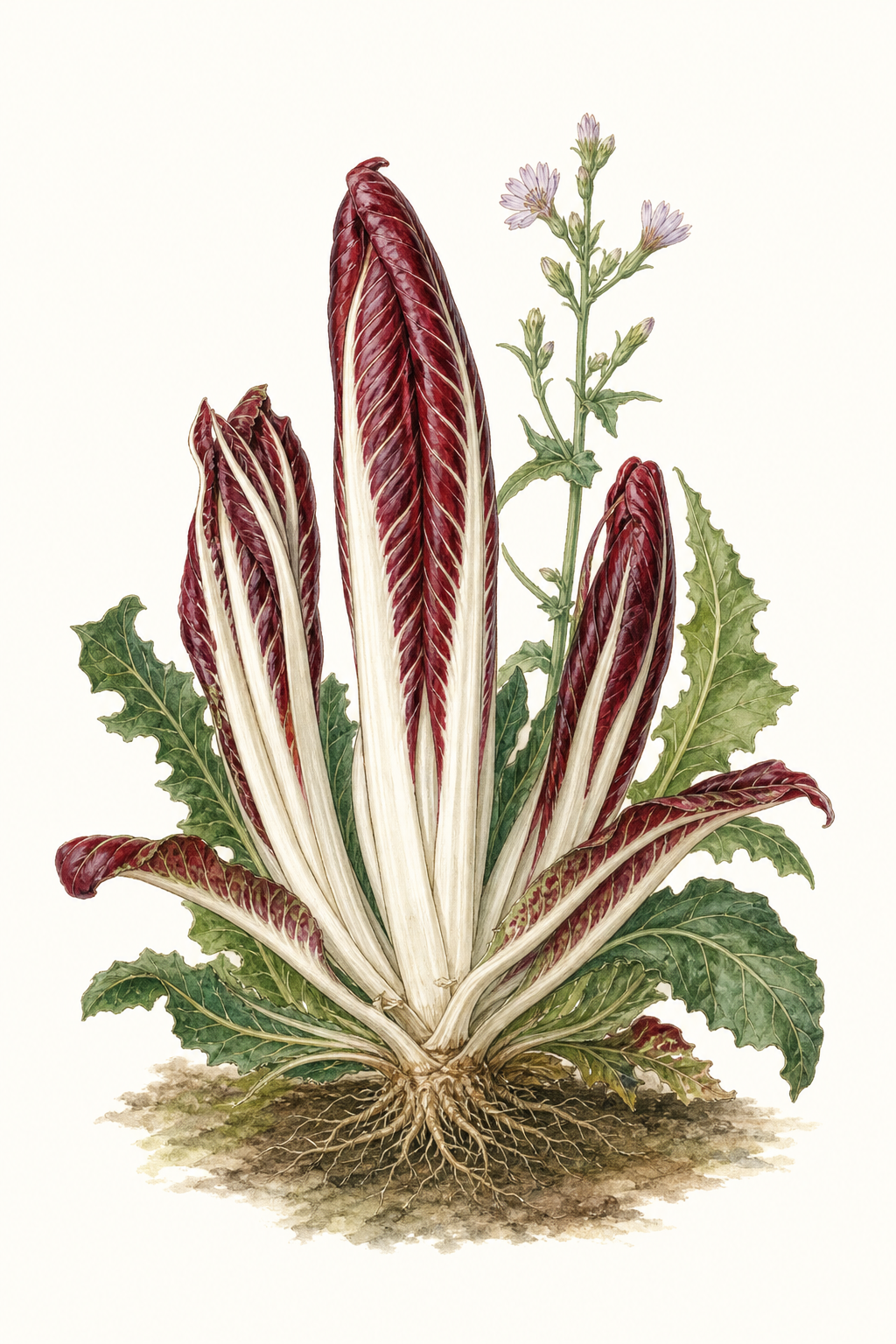
Crisp, cool-hearted heads emerge in about 60 days with a dramatic, wine-dark red over pale ivory ribs—so vivid they look lacquere…
Crop Dates
| Milestone | Date |
|---|---|
| Start Indoors | Direct Sow |
| Last Frost | May 15th |
| Transplant / Sow Outdoors | May 15th |
| Harvest Begins | Jul 14th |
| Harvest Ends | Sep 24th |
Crop Details
| Trait | Value |
|---|---|
| Days to Maturity | 60 |
| Sun Requirements | Full Sun |
| Growth Habit | Rosette |
| Support Needed | None |
| Planting Depth | Normal |
| Germination Temp (°F) | 45 |
| Min Soil Temp (°F) | 40 |
| Min Night Temp (°F) | 28 |
| Harden Off (days) | Not Required |
Recommended Companions
Frequently Asked Questions
What disease or pest problem most commonly affects Cichorium intybus (Treviso) and how can I control it?
How often should I water Treviso while it’s actively growing (full sun, about 60 days)?
How do I know when Treviso (Cichorium intybus) is ready to harvest?
Crisp, cool-hearted heads emerge in about 60 days with a dramatic, wine-dark red over pale ivory ribs—so vivid they look lacquered in the garden. The leaves are tightly layered and pleasantly bitter, with a clean crunch that holds beautifully from first harvest through the last bite, making Treviso ideal for fresh salads, roasting, and bold braises. Let its elongated form and striking striping inspire you to grow a radicchio that turns everyday meals into something richly seasonal and elegant.
Sowing Tips

Transplant Conditions
Wait until soil reaches 40°F and nights stay above 28°F before moving outdoors.
Expert Note

For best mild flavor, grow in cool weather and avoid heat spikes; bitter levels rise when plants bolt.