
All-In-One Wildflower Mix
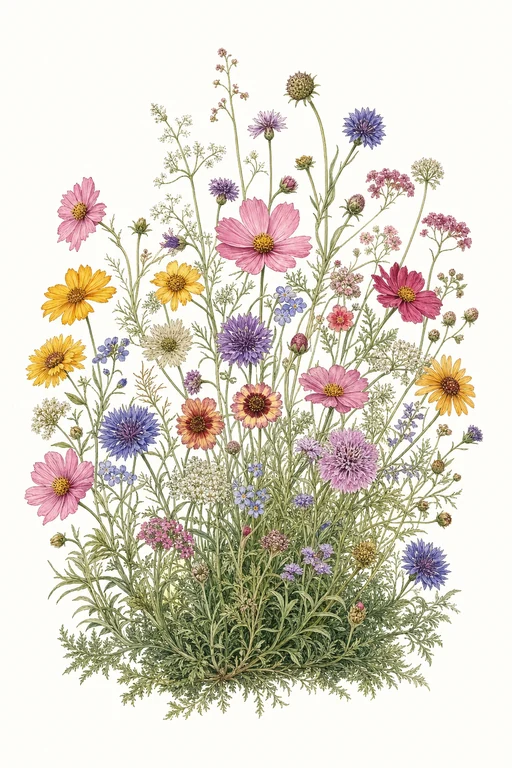
A living tapestry of color and motion, All-In-One Wildflower Mix bursts into bloom with a riot of petals that shimmer in sun and sway with every breeze.
Expect a succession of nectar-rich flowers and airy foliage that invite pollinators to linger—ideal for creating a thriving, low-effort landscape feature. Let it establish for a full season of showy, garden-bright color that keeps working long after the first flowers open.
Light: Full SunMaturity: 70 DaysHabit: Spreading
Planting schedules and alerts are optimized for Columbus (Zone 6b).
Crop Dates
| Milestone | Date |
|---|---|
| Start Indoors | Direct Sow |
| Last Frost | Apr 25th |
| Transplant / Sow Outdoors | Apr 25th |
| Harvest Begins | Jul 4th |
| Harvest Ends | Oct 16th |
Crop Details
| Trait | Value |
|---|---|
| Days to Maturity | 70 |
| Sun Requirements | Full Sun |
| Growth Habit | Spreading |
| Support Needed | None |
| Planting Depth | Surface |
| Germination Temp (°F) | 70 |
| Min Soil Temp (°F) | 55 |
| Min Night Temp (°F) | 40 |
| Harden Off (days) | Not Required |
Culinary Notes

Chef's Note
Wildflower mixes are a culinary wild card—flavor and edibility vary wildly by species, so you need exact identification before you eat any petals. Use confirmed edible blooms for small, bright garnishes (or a honey infusion), and treat everything else as purely decorative.

Best Uses
- Edible-flower garnish only if you can positively identify and confirm each species is edible
- Infused honey or light syrup only with known, safe edible bloom species
- Nectar-forward presentation for plated cocktails where you’re using only confirmed edible flowers

Flavor Profile

Kitchen Pairings
Frequently Asked Questions
What’s the most common problem in an all-in-one wildflower mix, and how do I manage it?
How often should I water during the main growing phase for a wildflower mix (about 70 days to maturity)?
How can I tell when an all-in-one wildflower mix is ready to harvest (70 days)?
Sowing Tips

Transplant Conditions
Wait until soil reaches 55°F and nights stay above 40°F before moving outdoors.
Expert Note

For the best stand, sow directly (or lightly press into the soil) and keep the top layer consistently moist until seedlings are established.