
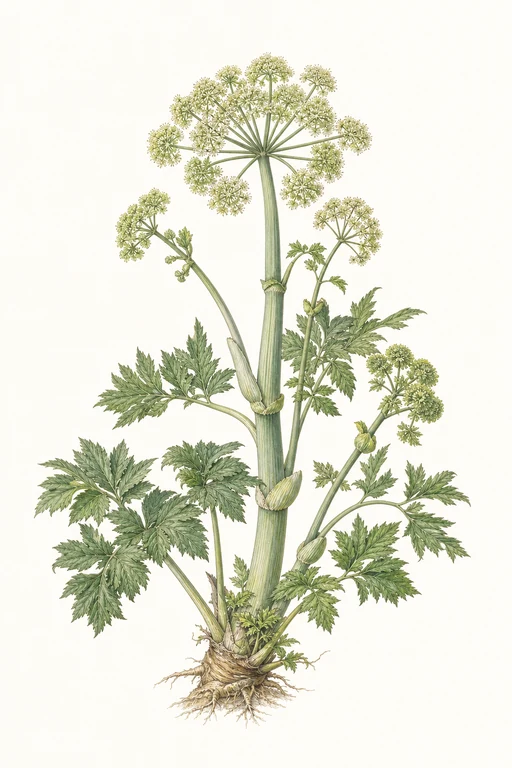
Angelica Archangelica
Fragrant, honeyed-green stems rise with a luminous, almost candied perfume—Angelica Archangelica is the herb that turns a garden into a living apothecary.
At maturity, the tender ribs are crisp and juicy, with a distinctive aromatic bite that’s both sweetly floral and pleasantly resinous. Grow it for bold flavor in syrups and cordials, for aromatic infusion in teas, and for elegant candied accents that showcase its signature character.
Light: Part SunMaturity: 365 DaysHabit: Upright
Location not set yet
Location not set yet
Enter your ZIP for local crop dates
Angelica Archangelica Planting Dates by USDA Zone
Estimated US hardiness-zone windows for sow, transplant, and harvest. Enter a US ZIP above for exact local dates, or open a zone below.
| Zone | Start Indoors | Sow / Transplant | Harvest |
|---|---|---|---|
| Zone 1a | Protected Environment Only | ||
| Zone 1b | Protected Environment Only | ||
| Zone 2a | Protected Environment Only | ||
| Zone 2b | Protected Environment Only | ||
| Zone 3a | Protected Environment Only | ||
| Zone 3b | Protected Environment Only | ||
| Zone 4a | Protected Environment Only | ||
| Zone 4b | Protected Environment Only | ||
| Zone 5a | Protected Environment Only | ||
| Zone 5b | Protected Environment Only | ||
| Zone 6a | Protected Environment Only | ||
| Zone 6b | Protected Environment Only | ||
| Zone 7a | Protected Environment Only | ||
| Zone 7b | Protected Environment Only | ||
| Zone 8a | Protected Environment Only | ||
| Zone 8b | Protected Environment Only | ||
| Zone 9a | Protected Environment Only | ||
| Zone 9b | Protected Environment Only | ||
| Zone 10a | — | Oct 1st | Feb 28th – Feb 28th |
| Zone 10b | — | Oct 1st | Feb 28th – Feb 28th |
| Zone 11a | — | Oct 1st | Feb 28th – Feb 28th |
| Zone 11b | — | Oct 1st | Feb 28th – Feb 28th |
| Zone 12a | — | Oct 1st | Feb 28th – Feb 28th |
| Zone 12b | — | Oct 1st | Feb 28th – Feb 28th |
| Zone 13a | — | Oct 1st | Feb 28th – Feb 28th |
| Zone 13b | — | Oct 1st | Feb 28th – Feb 28th |
Crop Details
| Trait | Value |
|---|---|
| Days to Maturity | 365 |
| Sun Requirements | Part Sun |
| Growth Habit | Upright |
| Support Needed | Stake |
| Planting Depth | Normal |
| Germination Temp (°F) | 60 |
| Min Soil Temp (°F) | 50 |
| Min Night Temp (°F) | 35 |
| Harden Off (days) | Not Required |
Culinary Notes

Chef's Note
These honeyed, honey-floral stems don’t taste like a typical herb—they read more like candied aromatics with a crisp snap, so treat them gently and let the perfume do the work. They’re at their best when quickly infused/poached or sugar-candied, where the resinous edge turns elegant instead of harsh.

Best Uses
- quick-steeped syrup or cordial base (watch it perfume fast)
- cordial/tea infusion for a clean, aromatic lift
- lightly cooked stems in compotes or poached preparations
- candied angelica accents for cakes and pastries

Flavor Profile

Kitchen Pairings
Frequently Asked Questions
Why are my Angelica plants getting powdery white spots, and what should I do?
How often should I water Angelica during the main growing season so the soil stays right?
How can I tell when Angelica (365 days) is ready to harvest?
Sowing Tips

Transplant Conditions
Wait until soil reaches 50°F and nights stay above 35°F before moving outdoors.
Expert Note

For biennials like angelica, aim to establish a strong first-year rosette (cool, damp conditions) rather than harvesting heavily the first season.