
Argent
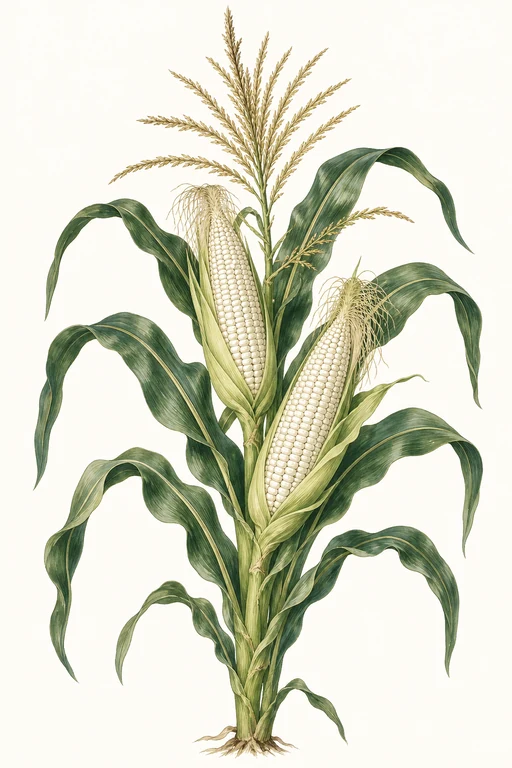
Silken tassels and tightly wrapped husks give way to kernels of luminous, creamy-white sweetness—bright as moonlight on the cob.
Argent’s ears develop with a refined, uniform rowing and a tender, juicy bite that turns especially delightful when enjoyed at peak freshness. Grow Argent for garden-to-table moments where its pale kernels shine in salads, steaming platters, and buttery summer spreads, or for spoon-bright sauces and quick pickling-style preserves.
Light: Full SunMaturity: 75 DaysHabit: Upright
Location not set yet
Location not set yet
Enter your ZIP for local crop dates
Argent Planting Dates by USDA Zone
Estimated US hardiness-zone windows for sow, transplant, and harvest. Enter a US ZIP above for exact local dates, or open a zone below.
| Zone | Start Indoors | Sow / Transplant | Harvest |
|---|---|---|---|
| Zone 1a | Protected Environment Only | ||
| Zone 1b | Protected Environment Only | ||
| Zone 2a | Direct Sow | May 25th | Aug 8th – Aug 29th |
| Zone 2b | Direct Sow | May 15th | Jul 29th – Aug 25th |
| Zone 3a | Direct Sow | May 15th | Jul 29th – Sep 1st |
| Zone 3b | Direct Sow | May 19th | Aug 2nd – Sep 21st |
| Zone 4a | Direct Sow | May 15th | Jul 29th – Sep 24th |
| Zone 4b | Direct Sow | May 13th | Jul 27th – Sep 27th |
| Zone 5a | Direct Sow | May 8th | Jul 22nd – Sep 30th |
| Zone 5b | Direct Sow | May 4th | Jul 18th – Oct 5th |
| Zone 6a | Direct Sow | May 1st | Jul 15th – Oct 10th |
| Zone 6b | Direct Sow | Apr 25th | Jul 9th – Oct 16th |
| Zone 7a | Direct Sow | Apr 20th | Jul 4th – Oct 20th |
| Zone 7b | Direct Sow | Apr 10th | Jun 24th – Oct 28th |
| Zone 8a | Direct Sow | Apr 1st | Jun 15th – Nov 5th |
| Zone 8b | Direct Sow | Mar 23rd | Jun 6th – Nov 12th |
| Zone 9a | Direct Sow | Mar 6th | May 20th – Nov 26th |
| Zone 9b | Direct Sow | Feb 9th | Apr 25th – Dec 9th |
| Zone 10a | — | Oct 1st | Dec 15th – Feb 28th |
| Zone 10b | — | Oct 1st | Dec 15th – Feb 28th |
| Zone 11a | — | Oct 1st | Dec 15th – Feb 28th |
| Zone 11b | — | Oct 1st | Dec 15th – Feb 28th |
| Zone 12a | — | Oct 1st | Dec 15th – Feb 28th |
| Zone 12b | — | Oct 1st | Dec 15th – Feb 28th |
| Zone 13a | — | Oct 1st | Dec 15th – Feb 28th |
| Zone 13b | — | Oct 1st | Dec 15th – Feb 28th |
Crop Details
| Trait | Value |
|---|---|
| Days to Maturity | 75 |
| Sun Requirements | Full Sun |
| Growth Habit | Upright |
| Support Needed | None |
| Planting Depth | Normal |
| Germination Temp (°F) | 60 |
| Min Soil Temp (°F) | 55 |
| Min Night Temp (°F) | 28 |
| Harden Off (days) | Not Required |
Culinary Notes

Chef's Note
This white sweet-corn variety is all about that milky, creamy sweetness—so serve it fast and keep heat minimal to preserve the juicy snap. Its pale kernels cling beautifully to butter and acid, making it especially good for charred-and-basted plates and bright, spoonable sauces.

Best Uses
- shucking and eating at peak freshness (cold or just-blanched)
- quick steam/char, then butter-salt baste for a glossy glaze
- corn salad where the kernels stay snappy under a light vinaigrette
- blend for spoon-bright puree to thicken chowders or silky summer sauces
- quick pickling-style preserves for tangy, candy-sweet pops

Flavor Profile

Kitchen Pairings
Frequently Asked Questions
What’s the most common pest or disease issue for sweet corn (Zea mays var. saccharata), and how do I control it?
How often should I water sweet corn during the main growing phase?
How can I tell when Argent sweet corn is ready to harvest?
Sowing Tips

Transplant Conditions
Wait until soil reaches 55°F and nights stay above 28°F before moving outdoors.
Expert Note

Plant sweet corn in blocks (not single rows) and keep soil moisture consistent from tassel through ear fill to maximize sweetness.