
Beauty Heart
Sink your senses into the crisp, jewel-bright bite of Beauty Heart winter radish—its flesh is clean and tender with a pleasantly piquant snap.
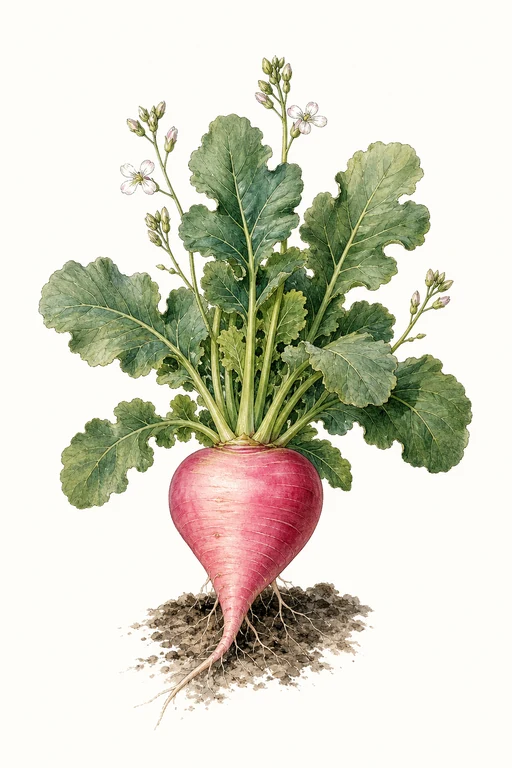
At maturity, the roots form a graceful heart-like shape with a smooth, satiny skin that roasts beautifully for mellow sweetness, while staying crisp enough for fresh slicing and vibrant pickling. Grow it for a long-season harvest that delivers striking color and a lively, peppery character from the garden to the jar.
Light: Full SunMaturity: 55 DaysHabit: Taproot
Crop Dates : 12a
| Milestone | Date |
|---|---|
| Start Indoors | — |
| Climate | Frost-Free Climate |
| Transplant / Sow Outdoors | Oct 1st |
| Harvest Begins | Nov 25th |
| Harvest Ends | Feb 28th |
Crop Details
| Trait | Value |
|---|---|
| Days to Maturity | 55 |
| Sun Requirements | Full Sun |
| Growth Habit | Taproot |
| Support Needed | None |
| Planting Depth | Normal |
| Germination Temp (°F) | 70 |
| Min Soil Temp (°F) | 45 |
| Min Night Temp (°F) | 28 |
| Harden Off (days) | Not Required |
Culinary Notes

Chef's Note
Beauty Heart is a winter radish meant to be felt: it bites crisp and peppery straight out of the bowl, then turns quietly sweet and rounded once it hits the oven. Use it where you want both snap and color—either vinegar-bright in a jar or roasted into tender wedges that still hold their shape.

Best Uses
- fresh slices for tart-crunch salads and grain bowls
- quick pickling for a bright, snappy bar snack jar
- roast wedges to soften the bite into a sweet, peppery caramel note
- shave or julienne into relishes with vinegar-forward dressing

Flavor Profile

Kitchen Pairings
Frequently Asked Questions
What pest or disease is most common on radish (Raphanus sativus), and how can I control it?
How often should I water radish (Raphanus sativus) during the main growing phase?
How do I tell when radish (Raphanus sativus) is ready to harvest?
Sowing Tips

Transplant Conditions
Wait until soil reaches 45°F and nights stay above 28°F before moving outdoors.
Expert Note

Sow in consistently moist soil and harvest before prolonged heat to keep the flesh crisp and sweet.