
Big Red
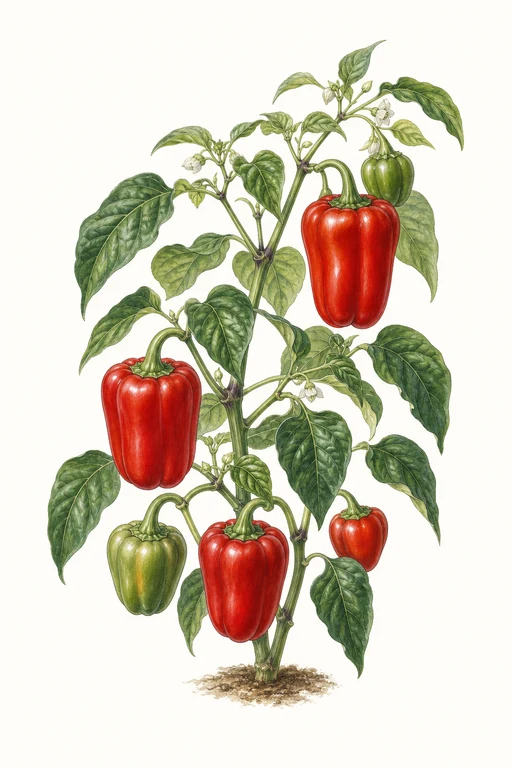
Sink your senses into Big Red’s glossy, thick-walled bell peppers—an eye-catching deep crimson that ripens with a satisfying weight and a crisp, juicy bite.
The fruit forms a broad, blocky shape with crisp shoulders and a smooth, lantern-like sheen, ideal for showcasing at the peak of maturity around 75 days. Big Red shines in fresh salads and vibrant salsas, and its bold sweetness also stands up beautifully to roasting for rich, caramelized flavor.
Light: Full SunMaturity: 75 DaysHabit: Bush
Location not set yet
Location not set yet
Enter your ZIP for local crop dates
Big Red Planting Dates by USDA Zone
Estimated US hardiness-zone windows for sow, transplant, and harvest. Enter a US ZIP above for exact local dates, or open a zone below.
| Zone | Start Indoors | Sow / Transplant | Harvest |
|---|---|---|---|
| Zone 1a | Protected Environment Only | ||
| Zone 1b | Protected Environment Only | ||
| Zone 2a | Apr 6th | Jul 20th | Oct 3rd – Aug 29th |
| Zone 2b | Mar 27th | Jul 10th | Sep 23rd – Aug 25th |
| Zone 3a | Mar 27th | Jul 10th | Sep 23rd – Sep 1st |
| Zone 3b | Mar 31st | Jul 14th | Sep 27th – Sep 21st |
| Zone 4a | Mar 27th | Jul 10th | Sep 23rd – Sep 24th |
| Zone 4b | Mar 25th | Jul 8th | Sep 21st – Sep 27th |
| Zone 5a | Mar 20th | Jul 3rd | Sep 16th – Sep 30th |
| Zone 5b | Mar 16th | Jun 29th | Sep 12th – Oct 5th |
| Zone 6a | Mar 13th | Jun 26th | Sep 9th – Oct 10th |
| Zone 6b | Mar 7th | Jun 20th | Sep 3rd – Oct 16th |
| Zone 7a | Mar 2nd | Jun 15th | Aug 29th – Oct 20th |
| Zone 7b | Feb 20th | Jun 5th | Aug 19th – Oct 28th |
| Zone 8a | Feb 11th | May 27th | Aug 10th – Nov 5th |
| Zone 8b | Feb 2nd | May 18th | Aug 1st – Nov 12th |
| Zone 9a | Jan 16th | May 1st | Jul 15th – Nov 26th |
| Zone 9b | Dec 22nd | Apr 6th | Jun 20th – Dec 9th |
| Zone 10a | Continuous Production | ||
| Zone 10b | Continuous Production | ||
| Zone 11a | Continuous Production | ||
| Zone 11b | Continuous Production | ||
| Zone 12a | Continuous Production | ||
| Zone 12b | Continuous Production | ||
| Zone 13a | Continuous Production | ||
| Zone 13b | Continuous Production | ||
Crop Details
| Trait | Value |
|---|---|
| Days to Maturity | 75 |
| Sun Requirements | Full Sun |
| Growth Habit | Bush |
| Support Needed | Stake |
| Planting Depth | Normal |
| Germination Temp (°F) | 80 |
| Min Soil Temp (°F) | 60 |
| Min Night Temp (°F) | 50 |
| Harden Off (days) | 10 |
Culinary Notes

Chef's Note
Big Red’s thick walls and high crunch-to-juice ratio make it earn its keep raw—no limp, watery pepper mush. Roast it hard for blistered, caramel edges, then lean on lime and fat (olive oil or feta) to sharpen the sweetness into something bright and addictive.

Best Uses
- heaping raw slices in sturdy salads where the crunch holds under vinaigrette
- diced into chunky pico/salsa for color and a clean, sweet bite
- roasted until blistered for caramelized edges and a meaty roast texture
- stuffed and baked for a sweet pepper base that doesn’t turn watery

Flavor Profile

Kitchen Pairings
Frequently Asked Questions
My Big Red peppers have silvery speckling and leaves look dusty—could it be spider mites, and what should I do?
How often should I water Big Red peppers during the main growing phase (after they start flowering)?
When are Big Red peppers ready to harvest, and how can I tell the right stage?
Sowing Tips

Transplant Conditions
Wait until soil reaches 60°F and nights stay above 50°F before moving outdoors. Harden off for 10 days first.
Expert Note

For best fruit set, transplant only after nights are reliably warm (about 50°F+), and keep soil evenly moist while plants establish.