
Black Aztec
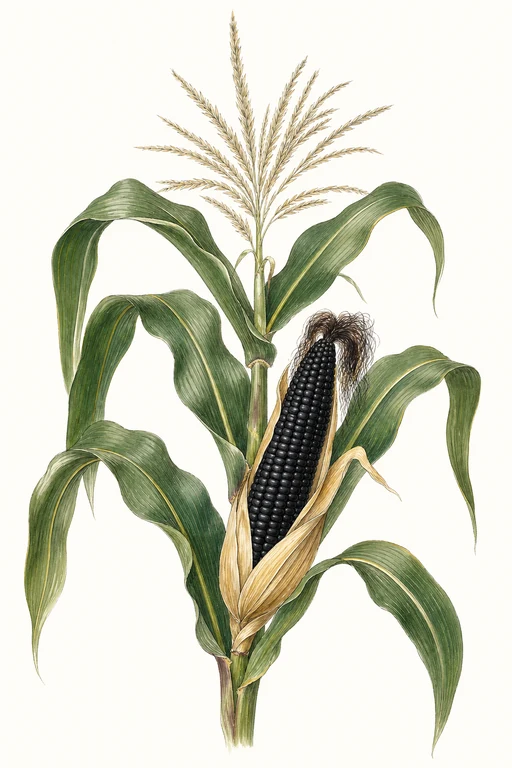
Sink your senses into Black Aztec’s velvety, near-black kernels that gleam with a subtle satin sheen, promising a rich, earthy sweetness when ground for flour.
The cobs develop in a bold, upright silhouette and fill out evenly, delivering a dense, fine-textured meal prized for its deep color and distinctive character. Grow this flour corn for baking and thickening with a dramatic, heritage-inspired hue that turns everyday recipes into something unforgettable.
Light: Full SunMaturity: 75 DaysHabit: Upright
Location not set yet
Location not set yet
Enter your ZIP for local crop dates
Black Aztec Planting Dates by USDA Zone
Estimated US hardiness-zone windows for sow, transplant, and harvest. Enter a US ZIP above for exact local dates, or open a zone below.
| Zone | Start Indoors | Sow / Transplant | Harvest |
|---|---|---|---|
| Zone 1a | Protected Environment Only | ||
| Zone 1b | Protected Environment Only | ||
| Zone 2a | Direct Sow | May 25th | Aug 8th – Aug 29th |
| Zone 2b | Direct Sow | May 15th | Jul 29th – Aug 25th |
| Zone 3a | Direct Sow | May 15th | Jul 29th – Sep 1st |
| Zone 3b | Direct Sow | May 19th | Aug 2nd – Sep 21st |
| Zone 4a | Direct Sow | May 15th | Jul 29th – Sep 24th |
| Zone 4b | Direct Sow | May 13th | Jul 27th – Sep 27th |
| Zone 5a | Direct Sow | May 8th | Jul 22nd – Sep 30th |
| Zone 5b | Direct Sow | May 4th | Jul 18th – Oct 5th |
| Zone 6a | Direct Sow | May 1st | Jul 15th – Oct 10th |
| Zone 6b | Direct Sow | Apr 25th | Jul 9th – Oct 16th |
| Zone 7a | Direct Sow | Apr 20th | Jul 4th – Oct 20th |
| Zone 7b | Direct Sow | Apr 10th | Jun 24th – Oct 28th |
| Zone 8a | Direct Sow | Apr 1st | Jun 15th – Nov 5th |
| Zone 8b | Direct Sow | Mar 23rd | Jun 6th – Nov 12th |
| Zone 9a | Direct Sow | Mar 6th | May 20th – Nov 26th |
| Zone 9b | Direct Sow | Feb 9th | Apr 25th – Dec 9th |
| Zone 10a | — | Oct 1st | Dec 15th – Feb 28th |
| Zone 10b | — | Oct 1st | Dec 15th – Feb 28th |
| Zone 11a | — | Oct 1st | Dec 15th – Feb 28th |
| Zone 11b | — | Oct 1st | Dec 15th – Feb 28th |
| Zone 12a | — | Oct 1st | Dec 15th – Feb 28th |
| Zone 12b | — | Oct 1st | Dec 15th – Feb 28th |
| Zone 13a | — | Oct 1st | Dec 15th – Feb 28th |
| Zone 13b | — | Oct 1st | Dec 15th – Feb 28th |
Crop Details
| Trait | Value |
|---|---|
| Days to Maturity | 75 |
| Sun Requirements | Full Sun |
| Growth Habit | Upright |
| Support Needed | None |
| Planting Depth | Normal |
| Germination Temp (°F) | 60 |
| Min Soil Temp (°F) | 60 |
| Min Night Temp (°F) | 28 |
| Harden Off (days) | Not Required |
Culinary Notes

Chef's Note
Black Aztec flour corn leans earthy and faintly cocoa-dark, with starch that thickens without turning chalky when cooked low and stirred. It’s the kind of dark corn that makes cornbread and grits taste like they’ve been to a wood-fired kitchen—so give it fats (butter/cheese) and bright lifts (lime/acid) rather than fighting it with sweetness.

Best Uses
- stone-ground or fine-ground corn flour for cornbread with a dark, nutty crumb
- thickening soups, stews, and chili for a silky-but-bodying texture
- polenta-style grits/porridge using the meal for a darker, more mineral finish
- corn pancakes/waffles where the flour’s color and starch help browning

Flavor Profile

Kitchen Pairings
Frequently Asked Questions
Why are my Black Aztec beans showing brown, water-soaked spots or yellowing leaves—what disease is this and how do I fix it?
How often should I water Black Aztec beans during the main growing phase to keep pods forming?
How do I tell when Black Aztec beans are ready to harvest at 75 days?
Sowing Tips

Transplant Conditions
Wait until soil reaches 60°F and nights stay above 28°F before moving outdoors.
Expert Note

Direct-sow sweet corn after soil warms (and keep it consistently moist) because seedlings suffer most from transplant root disturbance.