
SproutSmart
SproutSmart™ Intelligent Garden Sowing

Black Nebula

Family: Apiaceae Root Vegetable

Planting Schedule

Provide your location or planting zone to unlock dates and add Black Nebula to a garden.

Sink your spoon into the velvety depth of Black Nebula’s dark, near-black shoulders—an alluring, smoky sweetness that unfolds into a crisp, tender bite.

This Danvers-type carrot forms a classic tapered root with a smooth, fine-grained texture and a rich, earthy character that shines in fresh salads and bright, colorful roasts. Grow it for a dramatic harvest: the deep hue is as captivating in the garden as it is on the plate, with reliable performance at about 75 days.

Light: Full SunMaturity: 75 DaysHabit: Taproot
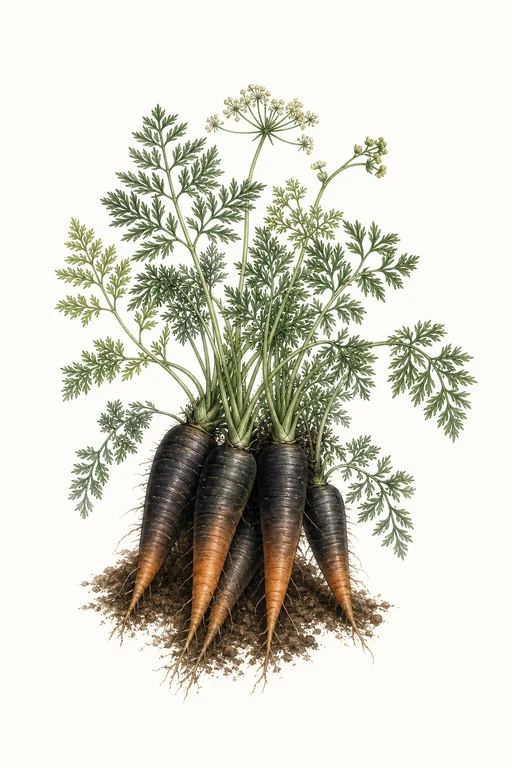
Botanical illustration of Black Nebula

Location not set yet

Location not set yet

Enter your ZIP for local crop dates

Black Nebula Planting Dates by USDA Zone

Estimated US hardiness-zone windows for sow, transplant, and harvest. Enter a US ZIP above for exact local dates, or open a zone below.

Zone Start Indoors Sow / Transplant Harvest
Zone 1a Protected Environment Only
Zone 1b Protected Environment Only
Zone 2a Direct Sow May 25th Aug 8th – Aug 29th
Zone 2b Direct Sow May 15th Jul 29th – Aug 25th
Zone 3a Direct Sow May 15th Jul 29th – Sep 1st
Zone 3b Direct Sow May 19th Aug 2nd – Sep 21st
Zone 4a Direct Sow May 15th Jul 29th – Sep 24th
Zone 4b Direct Sow May 13th Jul 27th – Sep 27th
Zone 5a Direct Sow May 8th Jul 22nd – Sep 30th
Zone 5b Direct Sow May 4th Jul 18th – Oct 5th
Zone 6a Direct Sow May 1st Jul 15th – Oct 10th
Zone 6b Direct Sow Apr 25th Jul 9th – Oct 16th
Zone 7a Direct Sow Apr 20th Jul 4th – Oct 20th
Zone 7b Direct Sow Apr 10th Jun 24th – Oct 28th
Zone 8a Direct Sow Apr 1st Jun 15th – Nov 5th
Zone 8b Direct Sow Mar 23rd Jun 6th – Nov 12th
Zone 9a Direct Sow Mar 6th May 20th – Nov 26th
Zone 9b Direct Sow Feb 9th Apr 25th – Dec 9th
Zone 10a — Oct 1st Dec 15th – Feb 28th
Zone 10b — Oct 1st Dec 15th – Feb 28th
Zone 11a — Oct 1st Dec 15th – Feb 28th
Zone 11b — Oct 1st Dec 15th – Feb 28th
Zone 12a — Oct 1st Dec 15th – Feb 28th
Zone 12b — Oct 1st Dec 15th – Feb 28th
Zone 13a — Oct 1st Dec 15th – Feb 28th
Zone 13b — Oct 1st Dec 15th – Feb 28th

Crop Details

TraitValue
Days to Maturity75
Sun RequirementsFull SunFull sun
Growth HabitTaproot
Support NeededNone
Planting DepthSurface
Germination Temp (°F)70
Min Soil Temp (°F)40
Min Night Temp (°F)28
Harden Off (days)Not Required

Culinary Notes


Chef's Note

Black Nebula leans into a dark, smoky sweetness that tastes more like toasted sugar than straight carrot—so it loves heat and browning. Its fine-grained, crisp-tender texture holds up in raw shaves and won’t turn fluffy when you roast hot-and-fast.

Best Uses

  • shaved salads where the dark skin gives contrast and stays snappy
  • color-forward sheet-pan roasting—let the sugars bronzing quickly at high heat
  • quick-pickle slices for a crisp, smoky-sweet crunch

Flavor Profile

smoky-sweet, near-burnt caramel notes earthy and slightly peppery finish crisp-tender bite with fine, velvety grain

Kitchen Pairings

citrus (orange or lemon) smoked salt or black pepper honey or brown sugar glaze yogurt or crème fraîche ginger goat cheese

Frequently Asked Questions


What should I do if my Black Nebula plants get powdery mildew?
Powdery mildew commonly shows up as a white, dusty coating on Black Nebula leaves in warm, dry spells—especially if foliage stays humid. Remove the worst affected leaves, thin plants for airflow, and water at the soil line (not from above). Spray with a potassium bicarbonate product or horticultural sulfur following label directions at the first signs, then repeat as instructed until the coating stops spreading.
How often should I water Black Nebula during its main growing phase?
During the main growth period (roughly from when plants are actively expanding after transplanting/establishment through mid-season), keep soil consistently evenly moist but not waterlogged—aim for the top 1 inch to dry slightly between waterings. In most home gardens this is about 1 inch of water per week total (rain + irrigation), adjusted for heat and container size. Use a deep soak so moisture reaches root depth, and avoid daily light watering that keeps the surface wet but leaves deeper roots dry.
How can I tell when Black Nebula is ready to harvest?
Black Nebula is typically ready around 75 days from sowing, when pods/heads reach full size and the skin/caps are firm rather than soft or rubbery. For best flavor and color, harvest when the produce looks fully developed but before it starts to dull, split, or become tough. If you’re unsure, cut one sample: it should be crisp and fully filled for that variety’s size, not underdeveloped inside.