
Black Oxford
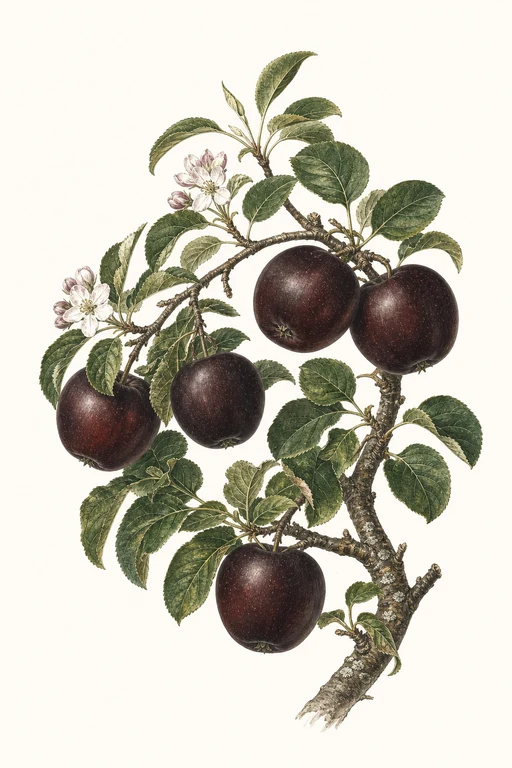
Crisp, juicy flesh with a richly balanced sweet-tart bite shines in Black Oxford apples, where the skin’s near-black mahogany blush deepens to a velvety sheen as the fruit ripens.
The texture is satisfyingly firm and cool-crunching, holding its character beautifully for long-lasting enjoyment. Grow Black Oxford for a standout market-class apple that brings bold, dark color to the orchard and delivers a classic apple profile you’ll want to keep on hand for fresh baskets and preserves alike.
Light: Full SunHabit: Shrub
Planting schedules and alerts are optimized for Columbus (Zone 6b).
Crop Dates
| Milestone | Date |
|---|---|
| Start Indoors | Direct Sow |
| Last Frost | Apr 25th |
| Transplant / Sow Outdoors | Apr 25th |
| Harvest Begins | Apr 25th |
| Harvest Ends | Oct 16th |
Crop Details
| Trait | Value |
|---|---|
| Days to Maturity | N/A |
| Sun Requirements | Full Sun |
| Growth Habit | Shrub |
| Support Needed | Stake |
| Planting Depth | Normal |
| Germination Temp (°F) | N/A |
| Min Soil Temp (°F) | 50 |
| Min Night Temp (°F) | 25 |
| Harden Off (days) | Not Required |
Culinary Notes

Chef's Note
Black Oxford’s firm, long-crunch flesh makes it a cut-above for slicing—there’s enough acidity to stay lively without steamrolling the palate. Use it where you want that cool, juicy snap to survive the heat and still read as distinctly apple.

Best Uses
- thin slices on cheese boards without turning mealy
- raw eating or lunchbox crunch with minimal dressing
- slow-cooked preserves where the fruit keeps its shape
- braised or roasted apple as a tangy, glossy side

Flavor Profile

Kitchen Pairings
Frequently Asked Questions
How do I manage powdery mildew on Black Oxford lettuce (when leaves start showing a white dusty coating)?
How often should I water Black Oxford during the main growing phase?
When is Black Oxford ready to harvest, and how can I tell?
Sowing Tips

Transplant Conditions
Wait until soil reaches 50°F and nights stay above 25°F before moving outdoors.
Expert Note

Plant apple trees at full sun with well-drained soil and ensure pollination by planting a compatible variety nearby (or use a multi-grafted tree).