
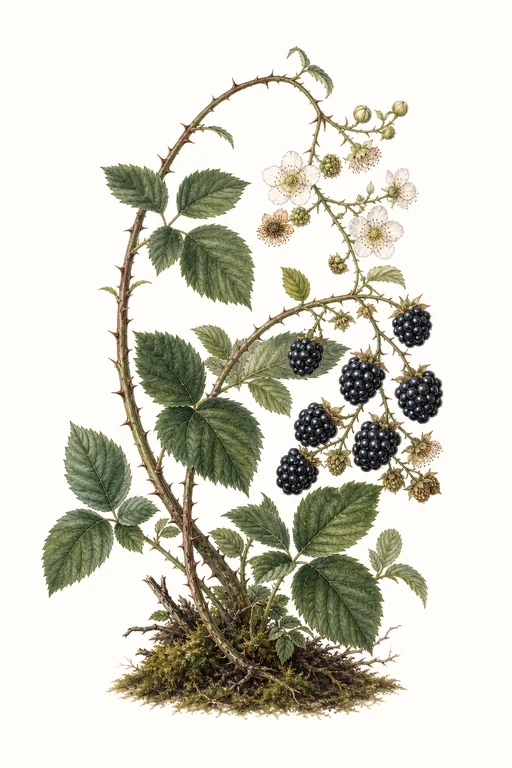
Blackberry
Velvety, inky-black berries unfurl into a sweet-tart perfume—brimming with a rich, wild-bramble character that tastes like summer’s last light.
Each blackberry is firm yet juicy, with a gentle snap and a glossy drupe surface that catches the sun, making every handful feel like a small harvest of velvet. Grow for abundant fresh picking and for deep-colored preserves and sauces that turn the season’s flavor into lasting, spoonable magic.
Light: Full SunMaturity: 365 DaysHabit: Spreading
Planting schedules and alerts are optimized for Columbus (Zone 6b).
Crop Dates
| Milestone | Date |
|---|---|
| Last Frost | Apr 25th |
| Growing Approach | Protected Environment Only |
Crop Details
| Trait | Value |
|---|---|
| Days to Maturity | 365 |
| Sun Requirements | Full Sun |
| Growth Habit | Spreading |
| Support Needed | Trellis |
| Planting Depth | Normal |
| Germination Temp (°F) | 70 |
| Min Soil Temp (°F) | 45 |
| Min Night Temp (°F) | 35 |
| Harden Off (days) | Not Required |
Culinary Notes

Chef's Note
Blackberries bring a juicy snap and a distinctly wild, perfumed tang that reads bright in the first bite and plush once cooked. If you want the fruit’s character to stay loud, reduce them briefly to a syrupy cling rather than overcooking into flat jam.

Best Uses
- stirred into thick yogurt or stirred custard where the seeds stay pleasantly textural
- quick pan reduction into a gloss for pork, duck, or grilled chicken
- freeze-friendly preserves and fruit leather (holds color and flavor)
- baking for jammy centers—tarts, galettes, and muffins with a slight tart lift

Flavor Profile

Kitchen Pairings
Frequently Asked Questions
What pest or disease commonly affects Rubus fruticosus (blackberry), and how can I treat it at home?
How often should I water Rubus fruticosus during the main growing season, and what soil moisture level should I aim for?
How do I tell when Rubus fruticosus is ready to harvest?
Sowing Tips

Transplant Conditions
Wait until soil reaches 45°F and nights stay above 35°F before moving outdoors.
Expert Note

Plant blackberry as dormant bare-root or container-grown in spring, then set up trellis/training immediately so first-year canes can establish strong roots and structure.