
Blackie
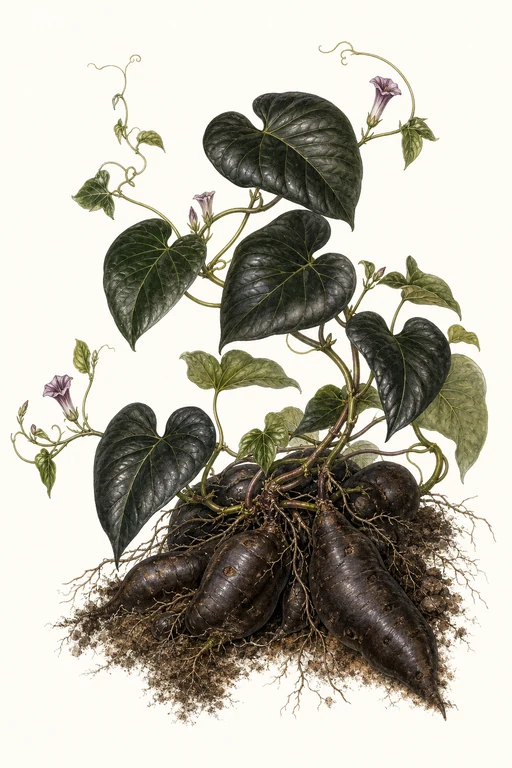
Sink your senses into Blackie’s velvety, near-black foliage—an ornamental sweet potato that turns the garden into a living tapestry.
At maturity, its tubers develop a dramatic, dark skin with a rich, earthy presence, while the vines spill and trail with a lush, glossy texture that looks spectacular in containers or as a groundcover. Grow Blackie for its show-stopping color and sculptural vine form—an eye-catching centerpiece that brings instant drama to beds and borders.
Light: Full SunMaturity: 90 DaysHabit: Vine
Planting schedules and alerts are optimized for Columbus (Zone 6b).
Crop Dates
| Milestone | Date |
|---|---|
| Start Indoors | Direct Sow |
| Last Frost | Apr 25th |
| Transplant / Sow Outdoors | Apr 25th |
| Harvest Begins | Jul 24th |
| Harvest Ends | Oct 16th |
Crop Details
| Trait | Value |
|---|---|
| Days to Maturity | 90 |
| Sun Requirements | Full Sun |
| Growth Habit | Vine |
| Support Needed | Trellis |
| Planting Depth | Normal |
| Germination Temp (°F) | 80 |
| Min Soil Temp (°F) | 65 |
| Min Night Temp (°F) | 55 |
| Harden Off (days) | 7 |
Culinary Notes

Chef's Note
This is marketed as an ornamental sweet potato (“Blackie”), and the profile you provided emphasizes foliage and tuber appearance over flavor. Only eat the tubers if you can confirm they’re from a food-cultivar and have been properly identified as safe/culinary-grade—otherwise treat it as decorative, not dinner.

Flavor Profile
Frequently Asked Questions
Blackie plants—how do I manage early blight if leaves start getting brown spots?
During Blackie’s main growing phase, how often should I water and what soil moisture target should I keep?
How can I tell when Blackie is ready to harvest?
Sowing Tips

Transplant Conditions
Wait until soil reaches 65°F and nights stay above 55°F before moving outdoors. Harden off for 7 days first.

Direct Sow Preferred
Sensitive roots — does not transplant well. If starting indoors, use biodegradable pots and disturb roots as little as possible when moving outdoors.
Expert Note

Grow as a warm-season sweet potato for its purple foliage: plant after soil warms and keep slips well-watered until they root, then reduce watering to encourage tuber formation.