
Blue Ballet
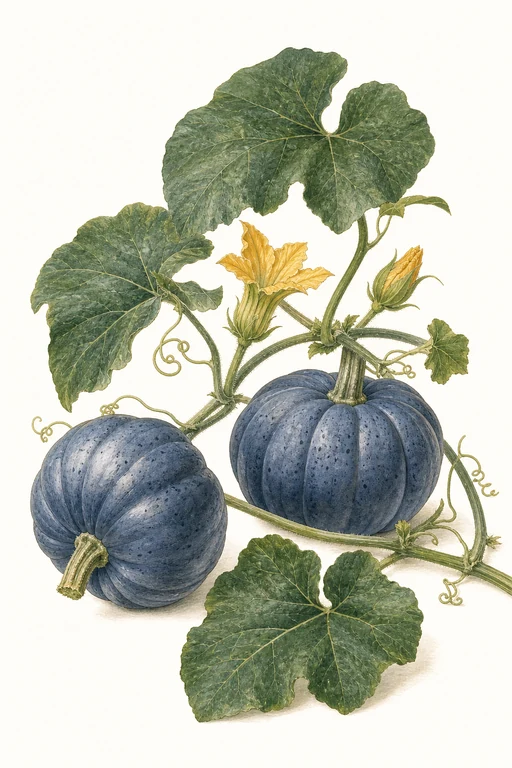
Velvety, deep-blue skin with a satin sheen invites the eye, while the flesh of Blue Ballet is richly golden and notably dense—ideal for slow-roasting flavor that turns sweet and mellow.
Expect a sturdy, well-branched winter squash habit that sets uniform fruit and holds quality through the season, with a satisfying, spoonable texture once fully cured. Grow Blue Ballet for hearty winter bowls, velvety purées, and pantry-ready preserves that celebrate its bold color and luxurious mouthfeel.
Light: Full SunMaturity: 95 DaysHabit: Vine
Planting schedules and alerts are optimized for Columbus (Zone 6b).
Crop Dates
| Milestone | Date |
|---|---|
| Start Indoors | Direct Sow |
| Last Frost | Apr 25th |
| Transplant / Sow Outdoors | May 23rd |
| Harvest Begins | Aug 26th |
| Harvest Ends | Oct 16th |
Crop Details
| Trait | Value |
|---|---|
| Days to Maturity | 95 |
| Sun Requirements | Full Sun |
| Growth Habit | Vine |
| Support Needed | Trellis |
| Planting Depth | Normal |
| Germination Temp (°F) | 70 |
| Min Soil Temp (°F) | 65 |
| Min Night Temp (°F) | 55 |
| Harden Off (days) | 10 |
Culinary Notes

Chef's Note
Blue Ballet’s dense, golden flesh roasts into a spoonable, custard-like texture—less watery than many winter squashes—so it stays luxurious in purées and bowls. The deep sweetness loves hot, aromatic partners like sage and cinnamon, and it caramelizes beautifully at low-and-slow temperatures.

Best Uses
- slow-roasted wedges until the edges caramelize and the center turns custardy
- velvety purée for soups that need body without thinning
- pantry-style roasted squash mash for ravioli filling or gnocchi dough
- thick, jammy preserves/chutney where its sweetness holds

Flavor Profile

Frequently Asked Questions
Why are my Blue Ballet plants wilting with gray moldy spots, and what should I do?
How often should I water Blue Ballet during the main growing phase (after establishment)?
How do I tell when Blue Ballet is ready to harvest at about 95 days?
Sowing Tips

Transplant Conditions
Wait until soil reaches 65°F and nights stay above 55°F before moving outdoors. Harden off for 10 days first.

Direct Sow Preferred
Sensitive roots — does not transplant well. If starting indoors, use biodegradable pots and disturb roots as little as possible when moving outdoors.
Expert Note

For best results, wait to transplant until soil is reliably warm (and cover briefly if nights are cool) because cucurbits root-shock easily.