
Blue Berries
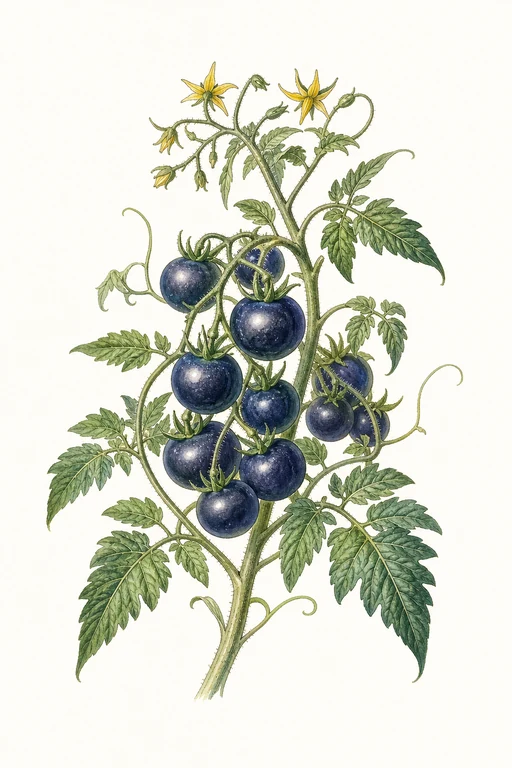
Bursting with a cool, midnight-blue sheen over compact cherry-size fruit, Blue Berries delivers a sweet-tart pop and a juicy, snappy bite that feels like summer caught in a jewel.
The skin is smooth and glossy, with a firm yet tender interior that shines in fresh salads and bright, colorful sauces. Grow this vigorous cherry tomato for patio-to-garden abundance—its distinctive fruit color makes every harvest moment feel like a rare find.
Light: Full SunMaturity: 60 DaysHabit: Indeterminate
Crop Dates : 5b
| Milestone | Date |
|---|---|
| Start Indoors | Mar 16th |
| Last Frost | May 4th |
| Transplant / Sow Outdoors | Jun 29th |
| Harvest Begins | Aug 28th |
| Harvest Ends | Oct 5th |
Crop Details
| Trait | Value |
|---|---|
| Days to Maturity | 60 |
| Sun Requirements | Full Sun |
| Growth Habit | Indeterminate |
| Support Needed | Stake |
| Planting Depth | Deep |
| Germination Temp (°F) | 75 |
| Min Soil Temp (°F) | 60 |
| Min Night Temp (°F) | 50 |
| Harden Off (days) | 10 |
Culinary Notes

Chef's Note
These cherry tomatoes are built for the bite—firm-tender flesh and juicy snap make them stay intact in salads and hold up to brief heat. Their sweet-tart profile loves clean acids like lemon or balsamic to push the sparkle instead of flatten it.

Best Uses
- quick toss salads where they stay snappy (no mush, no weeping)
- hot pan jam/sauce—brief reduction to concentrate without turning leathery
- skewers and charred blistering for caramel-edged sweetness
- burst-on-the-bite topping for flatbreads and tacos

Flavor Profile

Kitchen Pairings
Frequently Asked Questions
What do I do if my blueberry bushes get powdery white spots on leaves (powdery mildew)?
How often should I water blueberry plants during the main growing phase to keep berries growing well?
How can I tell when my blueberry fruits are ready to harvest?
Sowing Tips

Transplant Conditions
Wait until soil reaches 60°F and nights stay above 50°F before moving outdoors. Harden off for 10 days first.
Expert Note

For dark-indigo tomato types, give full sun and consistent moisture—color deepens with strong light and steady watering to avoid cracking.