
Blue Hopi
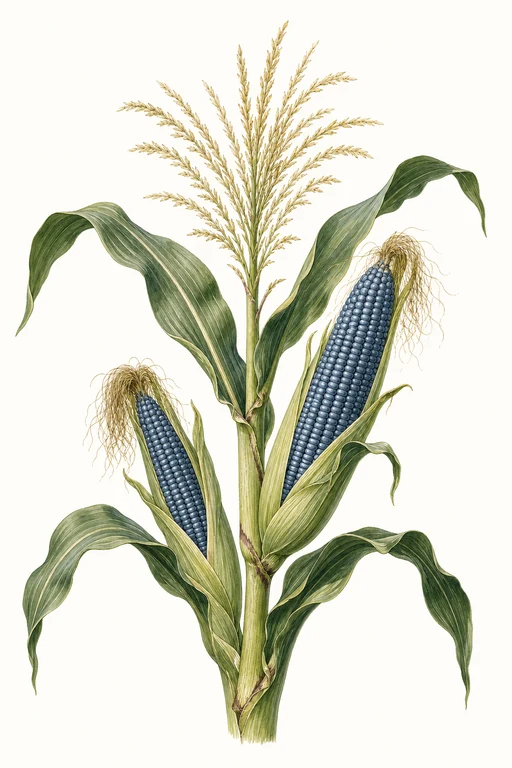
Sink your teeth into Blue Hopi’s richly nutty, floury kernels—an alluring blend of cool blue tones and warm, earthy sweetness that feels velvety in the bowl.
At maturity, the cobs develop a dense, medium-to-large ear with a satisfying, tender bite that grinds beautifully into fine flour for everyday baking and thickening. Grow this heritage flour corn for a striking harvest and a distinctive, storied flavor that turns simple meals into something memorable.
Light: Full SunMaturity: 85 DaysHabit: Upright
Crop Dates : 13a
| Milestone | Date |
|---|---|
| Start Indoors | — |
| Climate | Frost-Free Climate |
| Transplant / Sow Outdoors | Oct 1st |
| Harvest Begins | Dec 25th |
| Harvest Ends | Feb 28th |
Crop Details
| Trait | Value |
|---|---|
| Days to Maturity | 85 |
| Sun Requirements | Full Sun |
| Growth Habit | Upright |
| Support Needed | None |
| Planting Depth | Normal |
| Germination Temp (°F) | 60 |
| Min Soil Temp (°F) | 60 |
| Min Night Temp (°F) | 50 |
| Harden Off (days) | Not Required |
Culinary Notes

Chef's Note
Blue Hopi leans nutty and earthy rather than candy-sweet, and its kernels grind into flour that goes smooth and velvety in batter and porridges. Use it when you want corn flavor to read toasted and grounded—especially in thickened soups or griddled breads where the flour’s texture really shows.

Best Uses
- baking with Blue Hopi flour—corn muffins, hoecakes, and griddled quick breads
- thickening chowders and sauces (no grit when well-ground)
- creamy polenta-style porridges made from the flour
- roasting/boiling fresh cobs for a nutty, less-sugary sweet corn experience

Flavor Profile

Frequently Asked Questions
Why are my Blue Hopi plants getting powdery white patches on the leaves, and what should I do?
How often should I water Blue Hopi during the main growing phase (once it’s established)?
How can I tell when Blue Hopi is ready to harvest?
Sowing Tips

Transplant Conditions
Wait until soil reaches 60°F and nights stay above 50°F before moving outdoors.
Expert Note

Corn is wind-pollinated—plant in blocks (not rows) and keep soil evenly moist during tassel/silk for best ear fill.