
Calico Corn
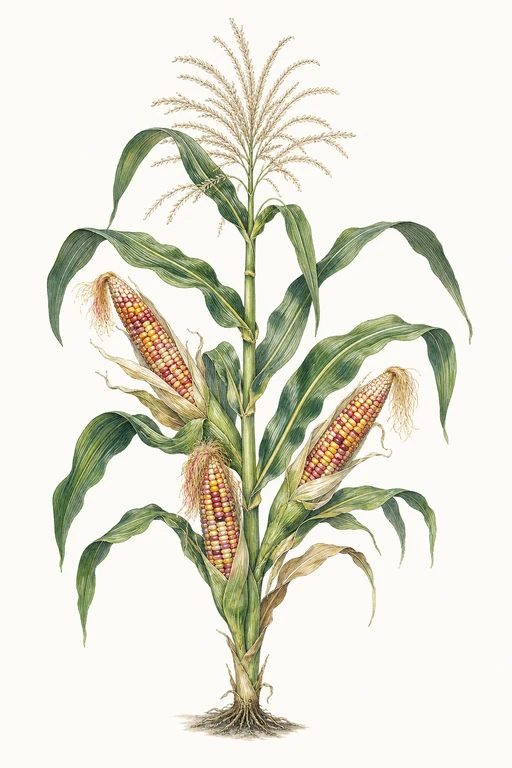
Wake to a feast of color in the garden: Calico Corn ripens into jewel-toned ears where creamy kernels blush through warm butter, rose-gold, and deep ember-red in painterly streaks.
The kernels are plump and firm with a crisp, satisfying bite, making each ear a striking centerpiece for autumn displays and seasonal arrangements. Grow Calico Corn for its bold, ornamental presence—an easy way to add vivid texture and lasting visual drama to your landscape at peak maturity.
Light: Full SunMaturity: 70 DaysHabit: Upright
Location not set yet
Location not set yet
Enter your ZIP for local crop dates
Calico Corn Planting Dates by USDA Zone
Estimated US hardiness-zone windows for sow, transplant, and harvest. Enter a US ZIP above for exact local dates, or open a zone below.
| Zone | Start Indoors | Sow / Transplant | Harvest |
|---|---|---|---|
| Zone 1a | Protected Environment Only | ||
| Zone 1b | Protected Environment Only | ||
| Zone 2a | Direct Sow | May 25th | Aug 3rd – Aug 29th |
| Zone 2b | Direct Sow | May 15th | Jul 24th – Aug 25th |
| Zone 3a | Direct Sow | May 15th | Jul 24th – Sep 1st |
| Zone 3b | Direct Sow | May 19th | Jul 28th – Sep 21st |
| Zone 4a | Direct Sow | May 15th | Jul 24th – Sep 24th |
| Zone 4b | Direct Sow | May 13th | Jul 22nd – Sep 27th |
| Zone 5a | Direct Sow | May 8th | Jul 17th – Sep 30th |
| Zone 5b | Direct Sow | May 4th | Jul 13th – Oct 5th |
| Zone 6a | Direct Sow | May 1st | Jul 10th – Oct 10th |
| Zone 6b | Direct Sow | Apr 25th | Jul 4th – Oct 16th |
| Zone 7a | Direct Sow | Apr 20th | Jun 29th – Oct 20th |
| Zone 7b | Direct Sow | Apr 10th | Jun 19th – Oct 28th |
| Zone 8a | Direct Sow | Apr 1st | Jun 10th – Nov 5th |
| Zone 8b | Direct Sow | Mar 23rd | Jun 1st – Nov 12th |
| Zone 9a | Direct Sow | Mar 6th | May 15th – Nov 26th |
| Zone 9b | Direct Sow | Feb 9th | Apr 20th – Dec 9th |
| Zone 10a | — | Oct 1st | Dec 10th – Feb 28th |
| Zone 10b | — | Oct 1st | Dec 10th – Feb 28th |
| Zone 11a | — | Oct 1st | Dec 10th – Feb 28th |
| Zone 11b | — | Oct 1st | Dec 10th – Feb 28th |
| Zone 12a | — | Oct 1st | Dec 10th – Feb 28th |
| Zone 12b | — | Oct 1st | Dec 10th – Feb 28th |
| Zone 13a | — | Oct 1st | Dec 10th – Feb 28th |
| Zone 13b | — | Oct 1st | Dec 10th – Feb 28th |
Crop Details
| Trait | Value |
|---|---|
| Days to Maturity | 70 |
| Sun Requirements | Full Sun |
| Growth Habit | Upright |
| Support Needed | None |
| Planting Depth | Normal |
| Germination Temp (°F) | 60 |
| Min Soil Temp (°F) | 60 |
| Min Night Temp (°F) | 50 |
| Harden Off (days) | Not Required |
Culinary Notes

Chef's Note
Even if it shows off like an ornamental, Calico Corn eats like sweet corn should: plump, juicy kernels with a crisp bite that holds up to high heat. It’s the kind of ear that turns into a centerpiece—then disappears off the plate once you hit it with butter, salt, and a little smoke.

Best Uses
- char-grilled or blistered corn-on-the-cob with lime and salt
- quick sauté of kernels for taco fillings and succotash-style plates
- creamy corn chowder where firm kernels don’t turn to mush
- corn salsa with crunchy texture (serve cold or room temp)

Flavor Profile

Frequently Asked Questions
What pest is most likely to hit sweet corn (Zea mays var. saccharata) and how do I stop it?
How often should I water calico sweet corn during the main growing phase?
How can I tell when calico sweet corn is ready to harvest (Zea mays var. saccharata)?
Sowing Tips

Transplant Conditions
Wait until soil reaches 60°F and nights stay above 50°F before moving outdoors.
Expert Note

Plant sweet corn in a block (not a single row) to improve pollination and ensure full, even ear fill.