
Calville Blanc D'Hiver
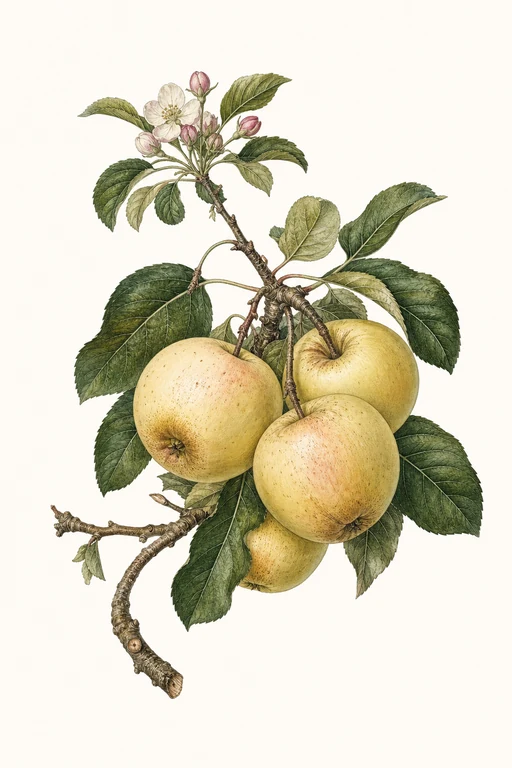
Bask in the luminous, honeyed perfume of Calville Blanc D’Hiver apples—crisp, juicy flesh with a bright, gently tart snap and a subtle floral sweetness.
The fruit’s pale, warm-ivory skin often carries a soft blush and a refined, waxy sheen, giving each apple a polished, heirloom look that feels as good as it tastes. Ideal for fresh enjoyment and for preserving into fragrant, spoonable favorites—its balanced flavor shines in sauces and keeps beautifully through the cool season.
Light: Full SunMaturity: 180 DaysHabit: Shrub
Planting schedules and alerts are optimized for Columbus (Zone 6b).
Crop Dates
| Milestone | Date |
|---|---|
| Last Frost | Apr 25th |
| Growing Approach | Protected Environment Only |
Crop Details
| Trait | Value |
|---|---|
| Days to Maturity | 180 |
| Sun Requirements | Full Sun |
| Growth Habit | Shrub |
| Support Needed | None |
| Planting Depth | Normal |
| Germination Temp (°F) | 65 |
| Min Soil Temp (°F) | 40 |
| Min Night Temp (°F) | 28 |
| Harden Off (days) | Not Required |
Culinary Notes

Chef's Note
Calville Blanc d’Hiver eats like a crisp, perfumed orchard breath—its honeyed aroma and gentle tartness stay intact when warmed, so you don’t need heavy sugar to get lift. Treat it with restraint: cold slices for maximum snap, or a controlled reduction where the flesh turns spoonable without collapsing into bland jam.

Best Uses
- serve cold as sliced apples with minimal dressing so the floral snap stays clean
- cook down into spoon-thick apple sauce or compote—sweet-sour stays lively instead of stewing flat
- slow-reduce for a silky apple glaze or cider-adjacent syrup for pork and duck
- poach or bake into tarte tatin–style caramelized slices where the fruit keeps structure

Flavor Profile

Kitchen Pairings
Frequently Asked Questions
What pest or disease is most likely to affect Malus domestica (Calville Blanc d’Hiver), and what should I do?
How often should I water Malus domestica during the main growing phase?
How do I tell when Calville Blanc d’Hiver apples are ready to harvest?
Sowing Tips

Transplant Conditions
Wait until soil reaches 40°F and nights stay above 28°F before moving outdoors.
Expert Note

For best results in home orchards, buy a locally adapted grafted dwarf/semi-dwarf tree and plant in full sun with good drainage; apples generally need cross-pollination from a different compatible cultivar.