
Calypso Onion
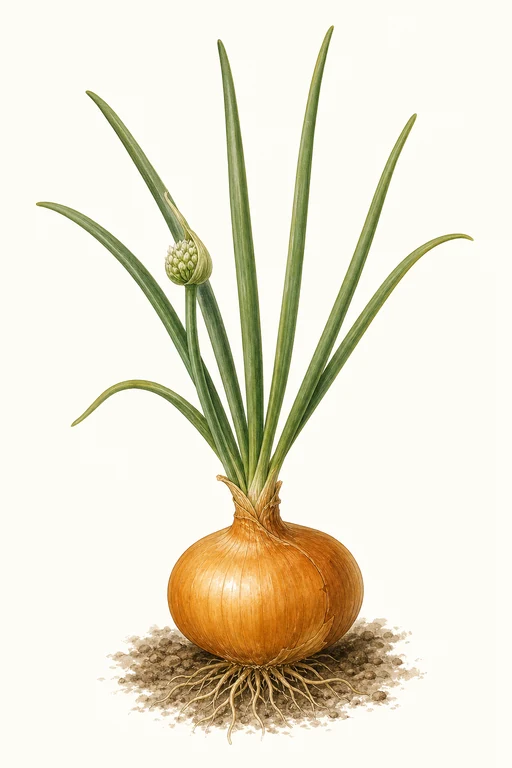
Sweetly aromatic and richly savory, Calypso Onion forms handsome, well-filled bulbs with a balanced bite that turns mellow in the pan and shines in everyday preparations.
The skin is a warm golden-brown with a tidy, papery finish, while the crisp interior layers offer a fine, juicy texture ideal for slicing and layering. Grow Calypso for dependable, intermediate-day performance and a dependable harvest that’s as beautiful on the counter as it is in the garden.
Light: Full SunMaturity: 120 DaysHabit: Bulbing
Crop Dates : 7a
| Milestone | Date |
|---|---|
| Start Indoors | Feb 23rd |
| Last Frost | Apr 20th |
| Transplant / Sow Outdoors | Apr 20th |
| Harvest Begins | Aug 18th |
| Harvest Ends | Oct 20th |
Crop Details
| Trait | Value |
|---|---|
| Days to Maturity | 120 |
| Sun Requirements | Full Sun |
| Growth Habit | Bulbing |
| Support Needed | None |
| Planting Depth | Normal |
| Germination Temp (°F) | 75 |
| Min Soil Temp (°F) | 45 |
| Min Night Temp (°F) | 28 |
| Harden Off (days) | 5 |
Culinary Notes

Chef's Note
Calypso has that sweet-leaning onion aroma and juicy layer structure that turns mellow fast, so it doesn’t need a long, fussy cook to taste rounded. It’s the kind of intermediate-day bulb that holds its slice in a hot pan and gives you clean browning—right up to the edge of jammy.

Best Uses
- thin slicing for raw applications where it won’t overwhelm
- hot-pan sautéing to go from sharp to syrupy-mellow quickly
- caramelized-ish roasting for golden browning without burning
- French-style onion base for soups and braises, where it melts evenly

Flavor Profile

Kitchen Pairings
Frequently Asked Questions
What pest or disease is most likely to affect Allium cepa (Calypso onion), and how can I treat it?
How often should I water Calypso onion during the main growing phase?
How do I tell when Calypso onion is ready to harvest?
Sowing Tips

Transplant Conditions
Wait until soil reaches 45°F and nights stay above 28°F before moving outdoors. Harden off for 5 days first.
Expert Note

For mild, sweet, marketable bulbs, keep soil evenly moist and plant transplants deep enough to anchor the base while leaving the neck just above the soil line.