
Camelot
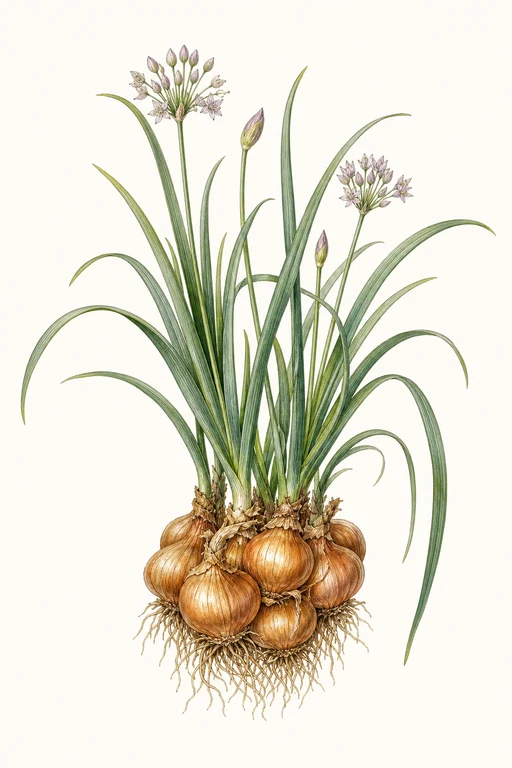
Silky, coppery-sun shallots of ‘Camelot’ bring a gentle sweetness and a savory depth that lingers on the palate—ideal when you want flavor that’s refined rather than sharp.
The bulbs form in tidy clusters with a smooth, papery golden-brown skin and crisp, fine-textured flesh, making them a standout for everyday sauces and slow-simmered favorites. Grow ‘Camelot’ for reliable, uniform maturity in about 90 days, and enjoy the satisfying harvest of elegant, kitchen-ready shallots.
Light: Full SunMaturity: 90 DaysHabit: Bulbing
Planting schedules and alerts are optimized for Columbus (Zone 6b).
Crop Dates
| Milestone | Date |
|---|---|
| Start Indoors | Direct Sow |
| Last Frost | Apr 25th |
| Transplant / Sow Outdoors | Apr 25th |
| Harvest Begins | Jul 24th |
| Harvest Ends | Oct 16th |
Crop Details
| Trait | Value |
|---|---|
| Days to Maturity | 90 |
| Sun Requirements | Full Sun |
| Growth Habit | Bulbing |
| Support Needed | None |
| Planting Depth | Normal |
| Germination Temp (°F) | 70 |
| Min Soil Temp (°F) | 50 |
| Min Night Temp (°F) | 35 |
| Harden Off (days) | Not Required |
Culinary Notes

Chef's Note
Camelot shallots give you refined sweetness with a silky, fine texture—so they disappear into sauces instead of staying sharp or fibrous. Use them for reductions and slow simmers where that lingering savory finish can cloak richer fats and acids like butter and wine.

Best Uses
- buttery shallot reduction for pan sauces
- slow-simmered base for soups and ragù
- finely chopped raw or lightly pickled topping for cheese and charcuterie boards
- quick sauté where they melt into the dish without turning harsh

Flavor Profile

Kitchen Pairings
Frequently Asked Questions
What pest or disease most often affects Allium cepa var. aggregatum (Camelot scallions/onion bunching) and how do I treat it?
How often should I water Camelot during the main growing phase to keep bulbs/bunches forming well?
How can I tell when Camelot (Allium cepa var. aggregatum) is ready to harvest at ~90 days?
Sowing Tips

Transplant Conditions
Wait until soil reaches 50°F and nights stay above 35°F before moving outdoors.
Expert Note

For the best bulb set with seed-grown shallots, keep seedlings evenly moist and avoid letting plants dry out during the early root-establishment phase.