
Chioggia
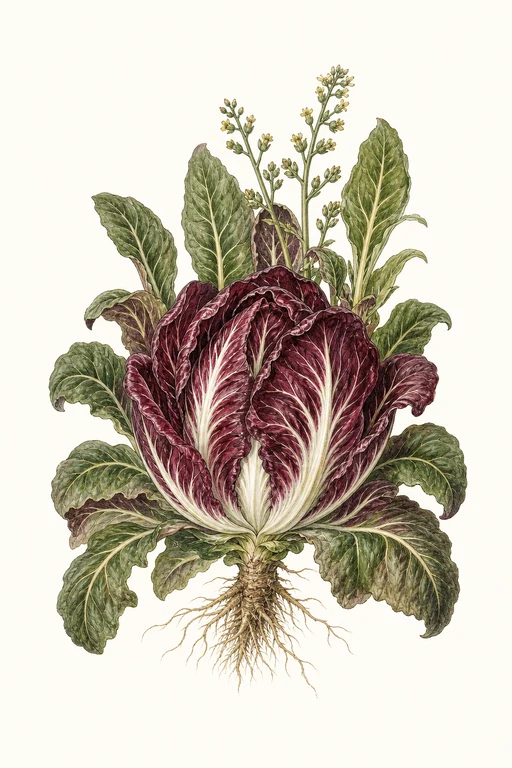
Crisp, jewel-toned heads of Chioggia radicchio arrive in striking candy-cane ribbons—deep burgundy to near-black with vivid cream-white striping that looks almost lacquered.
The leaves form a tight, compact rosette with a pleasantly snappy bite and a pleasantly bold, pleasantly bitter edge that shines in classic radicchio preparations. Grow Chioggia for dependable, uniform heads at about 60 days, ideal for roasting, braising, and grilling, as well as for fresh salads and vibrant sauces.
Light: Full SunMaturity: 60 DaysHabit: Rosette
Planting schedules and alerts are optimized for Columbus (Zone 6b).
Crop Dates
| Milestone | Date |
|---|---|
| Start Indoors | Direct Sow |
| Last Frost | Apr 25th |
| Transplant / Sow Outdoors | Apr 25th |
| Harvest Begins | Jun 24th |
| Harvest Ends | Oct 16th |
Crop Details
| Trait | Value |
|---|---|
| Days to Maturity | 60 |
| Sun Requirements | Full Sun |
| Growth Habit | Rosette |
| Support Needed | None |
| Planting Depth | Surface |
| Germination Temp (°F) | 55 |
| Min Soil Temp (°F) | 45 |
| Min Night Temp (°F) | 28 |
| Harden Off (days) | Not Required |
Culinary Notes

Chef's Note
Chioggia radicchio brings that jewel-toned, ribboned crunch with a bold bitter line—best fought with fat and acid, or tamed through heat until it turns plush at the edges. Use it when you want a salad or braise that stays textural, not mushy, and lands a crisp, slightly stern finish.

Best Uses
- grilling or char-roasting to turn edges caramel-sweet while keeping the center crisp
- braising in a red-wine or balsamic-laced bath to mellow the bitterness into a silky glaze
- tossing into salads with a sharp dressing so the crunch stays loud
- shaving for crunchy salad ribbons or quick pan-wilted side dishes

Flavor Profile

Kitchen Pairings
Frequently Asked Questions
What pest or disease commonly affects Chioggia beet (Beta vulgaris subsp. vulgaris), and how do I treat it?
How often should I water Chioggia beets during the main growth phase to prevent poor roots?
How can I tell when Chioggia beet is ready to harvest?
Sowing Tips

Transplant Conditions
Wait until soil reaches 45°F and nights stay above 28°F before moving outdoors.
Expert Note

For Chioggia-style round radicchio, sow in cool weather (and aim for a light frost) to maximize bitterness-friendly flavor and crispness.