
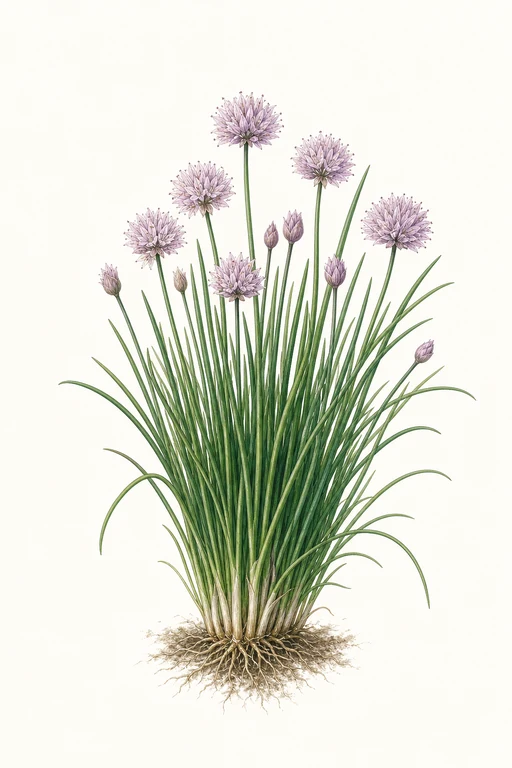
Common Chives
Fragrant, oniony blades rise in tidy clumps, offering a crisp, snappy bite and a vivid green that looks as fresh as it tastes.
‘Common Chives’ delivers dependable harvests with fine, hollow stems and a clean, bright flavor that shines in everyday garnishes, herb blends, and quick pickling brines. Grow it for repeated snips from spring through early fall—an elegant kitchen garden staple that rewards regular care with bold, aromatic growth.
Light: Full SunMaturity: 60 DaysHabit: Clumping
Location not set yet
Location not set yet
Enter your ZIP for local crop dates
Common Chives Planting Dates by USDA Zone
Estimated US hardiness-zone windows for sow, transplant, and harvest. Enter a US ZIP above for exact local dates, or open a zone below.
| Zone | Start Indoors | Sow / Transplant | Harvest |
|---|---|---|---|
| Zone 1a | May 4th | Jun 15th | Aug 14th – Jul 15th |
| Zone 1b | Apr 20th | Jun 1st | Jul 31st – Aug 1st |
| Zone 2a | Apr 13th | May 25th | Jul 24th – Aug 29th |
| Zone 2b | Apr 3rd | May 15th | Jul 14th – Aug 25th |
| Zone 3a | Apr 3rd | May 15th | Jul 14th – Sep 1st |
| Zone 3b | Apr 7th | May 19th | Jul 18th – Sep 21st |
| Zone 4a | Apr 3rd | May 15th | Jul 14th – Sep 24th |
| Zone 4b | Apr 1st | May 13th | Jul 12th – Sep 27th |
| Zone 5a | Mar 27th | May 8th | Jul 7th – Sep 30th |
| Zone 5b | Mar 23rd | May 4th | Jul 3rd – Oct 5th |
| Zone 6a | Mar 20th | May 1st | Jun 30th – Oct 10th |
| Zone 6b | Mar 14th | Apr 25th | Jun 24th – Oct 16th |
| Zone 7a | Mar 9th | Apr 20th | Jun 19th – Oct 20th |
| Zone 7b | Feb 27th | Apr 10th | Jun 9th – Oct 28th |
| Zone 8a | Feb 18th | Apr 1st | May 31st – Nov 5th |
| Zone 8b | Feb 9th | Mar 23rd | May 22nd – Nov 12th |
| Zone 9a | Jan 23rd | Mar 6th | May 5th – Nov 26th |
| Zone 9b | Dec 29th | Feb 9th | Apr 10th – Dec 9th |
| Zone 10a | — | Oct 1st | Nov 30th – Feb 28th |
| Zone 10b | — | Oct 1st | Nov 30th – Feb 28th |
| Zone 11a | — | Oct 1st | Nov 30th – Feb 28th |
| Zone 11b | — | Oct 1st | Nov 30th – Feb 28th |
| Zone 12a | — | Oct 1st | Nov 30th – Feb 28th |
| Zone 12b | — | Oct 1st | Nov 30th – Feb 28th |
| Zone 13a | — | Oct 1st | Nov 30th – Feb 28th |
| Zone 13b | — | Oct 1st | Nov 30th – Feb 28th |
Crop Details
| Trait | Value |
|---|---|
| Days to Maturity | 60 |
| Sun Requirements | Full Sun |
| Growth Habit | Clumping |
| Support Needed | None |
| Planting Depth | Normal |
| Germination Temp (°F) | 70 |
| Min Soil Temp (°F) | 45 |
| Min Night Temp (°F) | 35 |
| Harden Off (days) | 7 |
Culinary Notes

Chef's Note
Common chives bring a clean, onion-herb snap that doesn’t get lost—hit them at the end so the flavor stays sharp and the stems remain pleasantly crisp. Their fine hollow blades also pickle quickly, turning tangy and bright without turning chewy.

Best Uses
- classic chive sour-cream or yogurt sauce
- finishing garnish for hot potatoes, eggs, and soups
- quick-pickled chives in vinegar brine
- folded into butter for steak or baked potatoes

Flavor Profile

Kitchen Pairings
Frequently Asked Questions
What pest or disease commonly affects Allium schoenoprasum (common chives), and how do I treat it?
How often should I water common chives during the main growing phase?
How can I tell when common chives are ready to harvest?
Sowing Tips

Transplant Conditions
Wait until soil reaches 45°F and nights stay above 35°F before moving outdoors. Harden off for 7 days first.
Expert Note

Start chives indoors for faster first harvest, but for best establishment transplant only once nights are consistently mild and soil has warmed.