
Common Mugwort
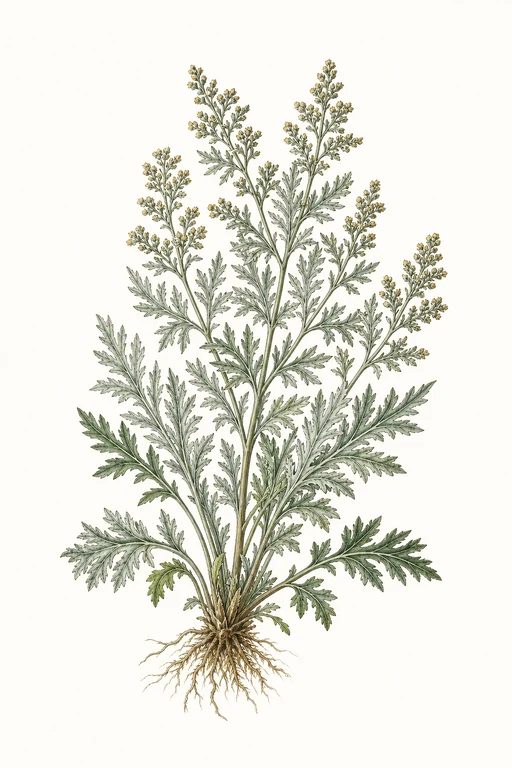
Aromatic and deeply resinous, Common Mugwort unfurls a silvery-green haze of fragrance the moment the foliage is brushed—earthy, bittersweet, and unmistakably herbal.
The leaves are finely divided and softly velvety, with a robust, lingering character that shines in dried bundles and herbal blends. Grow it for its bold, garden-worthy presence and its dependable harvest of fragrant sprigs over a long, steady season.
Light: Full SunMaturity: 90 DaysHabit: Perennial_Crown
Planting schedules and alerts are optimized for Columbus (Zone 6b).
Crop Dates
| Milestone | Date |
|---|---|
| Start Indoors | Mar 28th |
| Last Frost | Apr 25th |
| Transplant / Sow Outdoors | Apr 25th |
| Harvest Begins | Jul 24th |
| Harvest Ends | Oct 16th |
Crop Details
| Trait | Value |
|---|---|
| Days to Maturity | 90 |
| Sun Requirements | Full Sun |
| Growth Habit | Perennial_Crown |
| Support Needed | None |
| Planting Depth | Normal |
| Germination Temp (°F) | 65 |
| Min Soil Temp (°F) | 40 |
| Min Night Temp (°F) | 35 |
| Harden Off (days) | 7 |
Culinary Notes

Chef's Note
Common mugwort is a potent, resinous herb—think bittersweet absinthe vibes rather than everyday greenery. When you treat it like a seasoning (small amounts, controlled infusion), its camphor-herbal aroma lingers beautifully against pork fat, apples, and sharp vinegar.

Best Uses
- use sparingly in braises and fatty roasts where its bitterness can stand up
- stir into vinegar or vermouth-style infusions for a punchy, medicinal edge
- dry and crumble into rubs, where the resinous notes mellow into a smoky-herb haze
- infuse into cream or butter for a bittersweet herbal fat to coat gnocchi or polenta

Flavor Profile

Kitchen Pairings
Frequently Asked Questions
What pests or diseases commonly affect Artemisia vulgaris (common mugwort), and how can I manage them?
How often should I water Artemisia vulgaris during active growth to keep soil moisture right?
How do I know when Artemisia vulgaris is ready to harvest after about 90 days?
Sowing Tips

Transplant Conditions
Wait until soil reaches 40°F and nights stay above 35°F before moving outdoors. Harden off for 7 days first.
Expert Note

Give mugwort a sunny, well-drained spot and consider containment (it spreads by underground rhizomes).