
Cordner
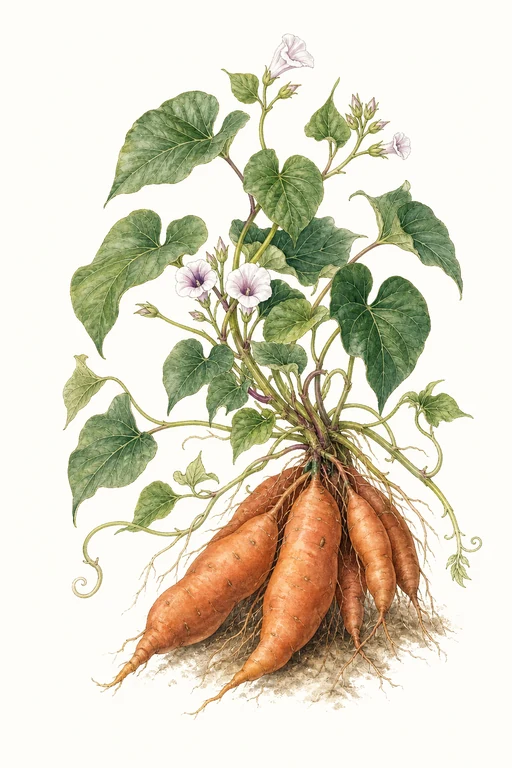
Warm, sunset-orange flesh fills the tuber with a velvety sweetness and a tender, creamy bite when cooked—Cordner is the orange sweet potato gardeners reach for when they want color as well as flavor.
The roots develop with a smooth, attractive skin and a satisfying, spoonable texture that shines in roasted wedges, mashed mounds, and silky purées, plus hearty casseroles and comforting pies. Grow Cordner for a harvest that feels like autumn in the garden and on the plate.
Light: Full SunMaturity: 90 DaysHabit: Vine
Planting schedules and alerts are optimized for Columbus (Zone 6b).
Crop Dates
| Milestone | Date |
|---|---|
| Start Indoors | Direct Sow |
| Last Frost | Apr 25th |
| Transplant / Sow Outdoors | Apr 25th |
| Harvest Begins | Jul 24th |
| Harvest Ends | Oct 16th |
Crop Details
| Trait | Value |
|---|---|
| Days to Maturity | 90 |
| Sun Requirements | Full Sun |
| Growth Habit | Vine |
| Support Needed | None |
| Planting Depth | Normal |
| Germination Temp (°F) | 75 |
| Min Soil Temp (°F) | 65 |
| Min Night Temp (°F) | 55 |
| Harden Off (days) | Not Required |
Culinary Notes

Chef's Note
Cordner’s orange flesh cooks up tender and creamy, not grainy—so it behaves beautifully for mashes and purées that actually hold a spoonable shape. The sweetness invites brown butter and spice, but a jolt of citrus keeps it from tipping too dessert-like.

Best Uses
- roasted wedges with crisp edges and creamy centers
- buttery mash or smashed sheet-pan potatoes
- silky purée for soups or base sauces
- hearty casseroles and sweet-savory pies

Flavor Profile

Kitchen Pairings
Frequently Asked Questions
What pest or disease most often affects Ipomoea batatas (sweet potato), and what should I do?
How often should I water Ipomoea batatas during the main growing phase?
How do I know when Ipomoea batatas is ready to harvest?
Sowing Tips

Transplant Conditions
Wait until soil reaches 65°F and nights stay above 55°F before moving outdoors.
Expert Note

Because Cordner is a bean type (taproots) and also very nematode-tolerant, direct-sow after last frost once soil is warm to minimize root disturbance.