
Cox's Orange Pippin
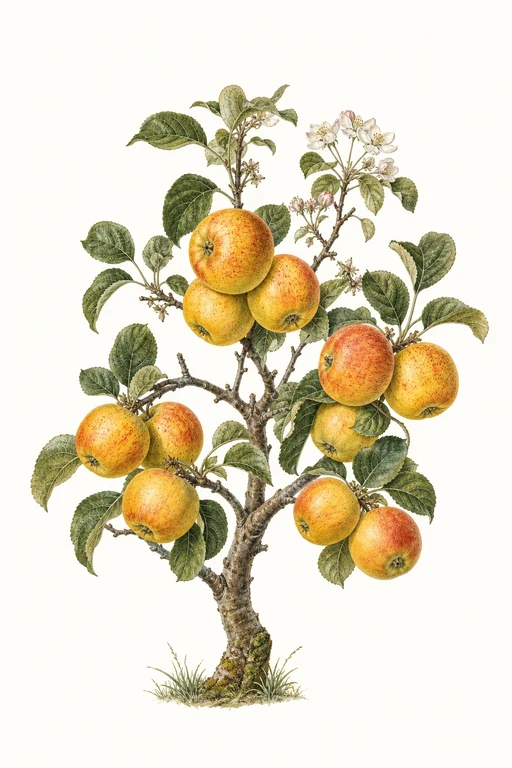
Aromas first—Cox’s Orange Pippin fills the air with a honeyed, orchard-sweet perfume and a whisper of spice.
At maturity, the fruit turns a warm golden base blushed with russety orange-red, with a crisp, juicy bite and a finely balanced tang that lingers pleasantly. Grow it for standout fresh fruit, and for richly flavored sauces and preserves that capture its classic, old-world character.
Light: Full SunMaturity: 365 DaysHabit: Shrub
Planting schedules and alerts are optimized for Columbus (Zone 6b).
Crop Dates
| Milestone | Date |
|---|---|
| Last Frost | Apr 25th |
| Growing Approach | Protected Environment Only |
Crop Details
| Trait | Value |
|---|---|
| Days to Maturity | 365 |
| Sun Requirements | Full Sun |
| Growth Habit | Shrub |
| Support Needed | None |
| Planting Depth | Normal |
| Germination Temp (°F) | 60 |
| Min Soil Temp (°F) | 50 |
| Min Night Temp (°F) | 35 |
| Harden Off (days) | Not Required |
Culinary Notes

Chef's Note
Cox’s Orange Pippin tastes like you opened a window in an old orchard—perfumed, sweet, and sharply balanced, with enough snap to stay interesting even when warmed. Use it for sauce or preserves where its tang keeps the sweetness from going flat, and for slicing it won’t collapse into bread-wet mush.

Best Uses
- thin slices for fresh eating on sharp cheddar or aged Gouda
- slow-simmered sauce where the tang stays bright
- thick preserves/jam to capture the perfume and spice
- roasting or baking to concentrate the honeyed notes

Flavor Profile

Kitchen Pairings
Frequently Asked Questions
What pest or disease is most likely on Malus domestica (apple) and what can I do about it?
How often should I water Cox’s Orange Pippin apples (Malus domestica) during the main growing season?
How do I tell when Cox’s Orange Pippin (Malus domestica) is ready to harvest?
Sowing Tips

Transplant Conditions
Wait until soil reaches 50°F and nights stay above 35°F before moving outdoors.
Expert Note

For best flavor, grow on a compatible rootstock and ensure strong pollination nearby (often a different cultivar).