
CrimsonCrisp
Crisp as a fresh snowfall, CrimsonCrisp apples burst with a bright, juicy snap and a sweet-tart balance that tastes vividly alive.
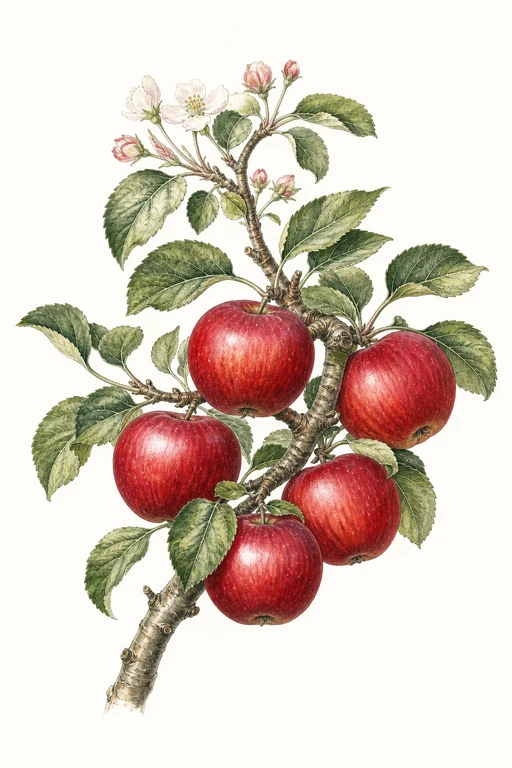
The fruit’s skin shines in deep crimson over warm blush, with a fine, tight grain that stays pleasantly crisp from tree to table. Grow CrimsonCrisp for standout fresh eating, and for bold color and clean flavor in sauces, cider, and preserves—an apple that brings garden pride to every jar and platter.
Light: Full SunMaturity: 365 DaysHabit: Shrub
Planting schedules and alerts are optimized for Columbus (Zone 6b).
Crop Dates
| Milestone | Date |
|---|---|
| Last Frost | Apr 25th |
| Growing Approach | Protected Environment Only |
Crop Details
| Trait | Value |
|---|---|
| Days to Maturity | 365 |
| Sun Requirements | Full Sun |
| Growth Habit | Shrub |
| Support Needed | None |
| Planting Depth | Normal |
| Germination Temp (°F) | 60 |
| Min Soil Temp (°F) | 50 |
| Min Night Temp (°F) | 32 |
| Harden Off (days) | Not Required |
Culinary Notes

Chef's Note
CrimsonCrisp is built for raw, because its tight grain and juicy snap don’t collapse the second you cut it—great when you want apples to stay crisp under a sharp vinaigrette or on a charcuterie board. Its sweet-tart profile also cooks down cleanly for sauce or preserves without tasting muddy or overly soft.

Best Uses
- fresh eating where the bite stays snappy (slices for salads or snack boards)
- high-acid applesauce—simmer briefly to keep texture and shine
- cider and drinking cider where crispness stays bright after fermentation
- jam/preserves that benefit from a clean set and vivid color

Flavor Profile

Frequently Asked Questions
What pest or disease is most likely to hit Malus domestica (apple) and how can I treat it at home?
How often should I water Malus domestica during the main growing season?
How do I know when Malus domestica is ready to harvest (CrimsonCrisp/Honeycrisp-type timing)?
Sowing Tips

Transplant Conditions
Wait until soil reaches 50°F and nights stay above 32°F before moving outdoors.
Expert Note

Plant apple trees in full sun with well-drained soil, and plan on buying a grafted dwarf/semi-dwarf tree plus confirming the needed pollinator variety for fruit set.