
SproutSmart
SproutSmart™ Intelligent Garden Sowing

Crosby Egyptian

Family: Amaranthaceae Root Vegetable

Planting Schedule

Provide your location or planting zone to unlock dates and add Crosby Egyptian to a garden.

Sweetly earthy and richly crimson, Crosby Egyptian beets develop a velvety, tender texture with deep-red interiors that hold their color beautifully.

Their compact, globe-shaped roots are wonderfully uniform at harvest, making them a joy to grow and a standout for vibrant color in every garden bounty. Grow Crosby Egyptian for reliable, early satisfaction—50 days to maturity—when you want bold red beets that shine in fresh salads, roasted platters, and striking pickled preserves.

Light: Full SunMaturity: 50 DaysHabit: Taproot
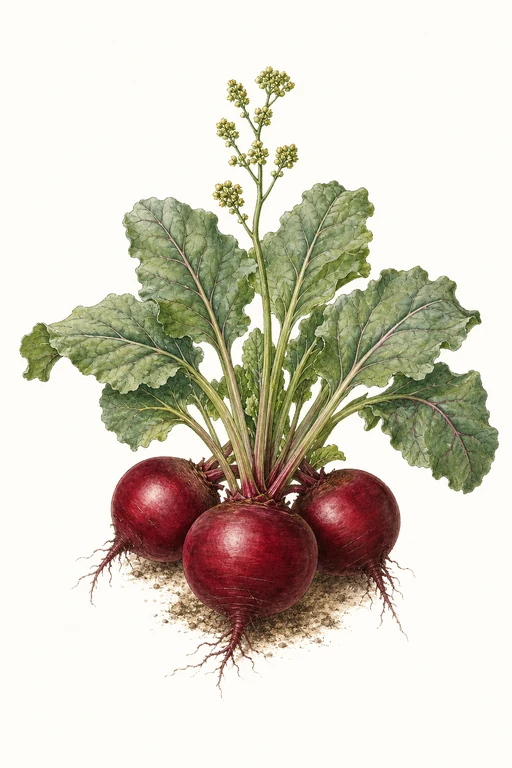
Botanical illustration of Crosby Egyptian

Location not set yet

Location not set yet

Enter your ZIP for local crop dates

Crosby Egyptian Planting Dates by USDA Zone

Estimated US hardiness-zone windows for sow, transplant, and harvest. Enter a US ZIP above for exact local dates, or open a zone below.

Zone Start Indoors Sow / Transplant Harvest
Zone 1a Protected Environment Only
Zone 1b Direct Sow Jun 1st Jul 21st – Aug 1st
Zone 2a Direct Sow May 25th Jul 14th – Aug 29th
Zone 2b Direct Sow May 15th Jul 4th – Aug 25th
Zone 3a Direct Sow May 15th Jul 4th – Sep 1st
Zone 3b Direct Sow May 19th Jul 8th – Sep 21st
Zone 4a Direct Sow May 15th Jul 4th – Sep 24th
Zone 4b Direct Sow May 13th Jul 2nd – Sep 27th
Zone 5a Direct Sow May 8th Jun 27th – Sep 30th
Zone 5b Direct Sow May 4th Jun 23rd – Oct 5th
Zone 6a Direct Sow May 1st Jun 20th – Oct 10th
Zone 6b Direct Sow Apr 25th Jun 14th – Oct 16th
Zone 7a Direct Sow Apr 20th Jun 9th – Oct 20th
Zone 7b Direct Sow Apr 10th May 30th – Oct 28th
Zone 8a Direct Sow Apr 1st May 21st – Nov 5th
Zone 8b Direct Sow Mar 23rd May 12th – Nov 12th
Zone 9a Direct Sow Mar 6th Apr 25th – Nov 26th
Zone 9b Direct Sow Feb 9th Mar 31st – Dec 9th
Zone 10a — Oct 1st Nov 20th – Feb 28th
Zone 10b — Oct 1st Nov 20th – Feb 28th
Zone 11a — Oct 1st Nov 20th – Feb 28th
Zone 11b — Oct 1st Nov 20th – Feb 28th
Zone 12a — Oct 1st Nov 20th – Feb 28th
Zone 12b — Oct 1st Nov 20th – Feb 28th
Zone 13a — Oct 1st Nov 20th – Feb 28th
Zone 13b — Oct 1st Nov 20th – Feb 28th

Crop Details

TraitValue
Days to Maturity50
Sun RequirementsFull SunFull sun
Growth HabitTaproot
Support NeededNone
Planting DepthNormal
Germination Temp (°F)55
Min Soil Temp (°F)40
Min Night Temp (°F)28
Harden Off (days)Not Required

Culinary Notes


Chef's Note

Crosby Egyptian’s compact roots cook into a tender, velvety bite with a sweet-earth profile that doesn’t turn chalky. The deep-red interior holds color beautifully under heat and acid, so it stays visually loud whether roasted, pickled, or shaved raw.

Best Uses

  • roast and slice into hot-forged salad where color won’t bleed
  • quick-pickle rounds for candy-red snacking
  • braise into a spoonable warm beet-and-yogurt situation
  • grate raw for a citrusy slaw that keeps a crisp bite

Flavor Profile

sweetly earthy beetiness tender, velvety interior rich crimson color that stays true clean, mineral finish without harshness

Kitchen Pairings

goat cheese orange balsamic vinegar walnuts dill yogurt

Frequently Asked Questions


What pest or disease commonly affects Beta vulgaris subsp. vulgaris (Crosby Egyptian) and how can I control it?
Beets often get Cercospora leaf spot, which shows up as brown spots with a pale gray center on older leaves and can cause leaf drop. Remove and discard infected leaves, water at the soil line (not on foliage), and improve airflow with proper spacing; if it’s severe, use a labeled copper-based fungicide and repeat according to the label. For future plantings, rotate beds so beets aren’t in the same spot each season.
How often should I water Crosby Egyptian beet during the main growing phase?
During the 6–8 weeks of bulking, keep the top 2–3 in (5–8 cm) of soil consistently moist but not soggy—aim for about 1 in (2.5 cm) of water per week, increasing slightly in hot weather. Water deeply, then allow the surface to dry slightly before watering again to prevent root disease and tough, fibrous roots. Mulch helps maintain steady moisture, which is key for tender roots.
How do I know when Crosby Egyptian beets are ready to harvest?
Harvest about 50 days after sowing when roots reach roughly 1–2 in (2.5–5 cm) across and the tops look vigorous but not overgrown. Pull one test beet to check size and tenderness; they should feel firm and smooth with minimal cracking. For the sweetest flavor, harvest before they get much larger than the typical small-beet size.