
Daikon
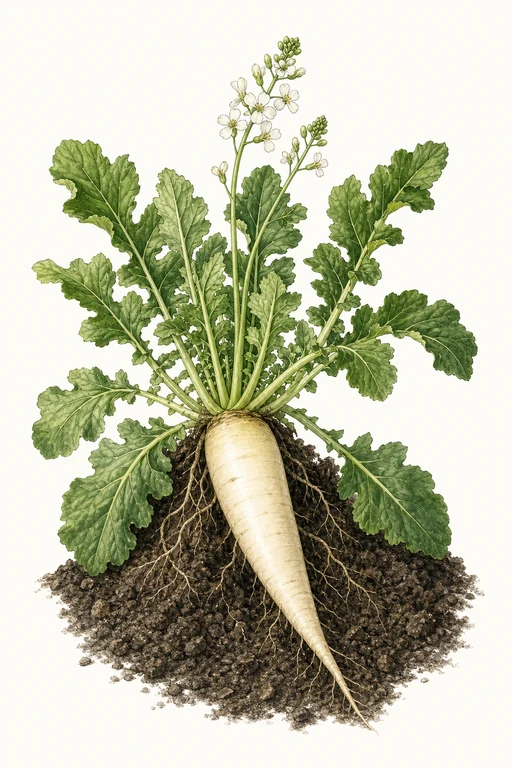
Silky and crisp from the first bite, Daikon Radish forms long, tapered roots with a clean, bright bite and a gently sweet finish.
The flesh stays tender and juicy, ideal for slicing into refreshing rounds or grating into bold, aromatic sauces and quick pickles—its mild character shines without turning harsh. Grow this 50-day favorite for a satisfying harvest that looks as elegant as it tastes, from garden to table.
Light: Full SunMaturity: 50 DaysHabit: Taproot
Planting schedules and alerts are optimized for Columbus (Zone 6b).
Crop Dates
| Milestone | Date |
|---|---|
| Start Indoors | Direct Sow |
| Last Frost | Apr 25th |
| Transplant / Sow Outdoors | Apr 25th |
| Harvest Begins | Jun 14th |
| Harvest Ends | Oct 16th |
Crop Details
| Trait | Value |
|---|---|
| Days to Maturity | 50 |
| Sun Requirements | Full Sun |
| Growth Habit | Taproot |
| Support Needed | None |
| Planting Depth | Normal |
| Germination Temp (°F) | 70 |
| Min Soil Temp (°F) | 45 |
| Min Night Temp (°F) | 40 |
| Harden Off (days) | Not Required |
Culinary Notes

Chef's Note
This daikon is built for that first-bite snap—juicy and mild enough to eat raw, but still assertive when it’s grated and marinated. Use it to cut through salty, fatty flavors (sesame, miso, chili) where its clean bite won’t collapse into mush.

Best Uses
- shaved or sliced rounds under soy-based dressings
- grated daikon for quick kimchi-style or vinegar pickles
- grated into noodle bowls to cool and sharpen rich broth
- shred for crunchy slaws with creamy sesame dressing

Flavor Profile

Kitchen Pairings
Frequently Asked Questions
What pest or disease most commonly affects daikon (Raphanus sativus), and what should I do?
How often should I water daikon during the main growing phase to keep roots tender?
How can I tell when daikon (Raphanus sativus) is ready to harvest?
Sowing Tips

Transplant Conditions
Wait until soil reaches 45°F and nights stay above 40°F before moving outdoors.
Expert Note

For the straightest, least-bitter roots, keep moisture consistent and avoid heat—daikon hates hot weather and tends to fork or go woody if stressed.