
Dakota Tears
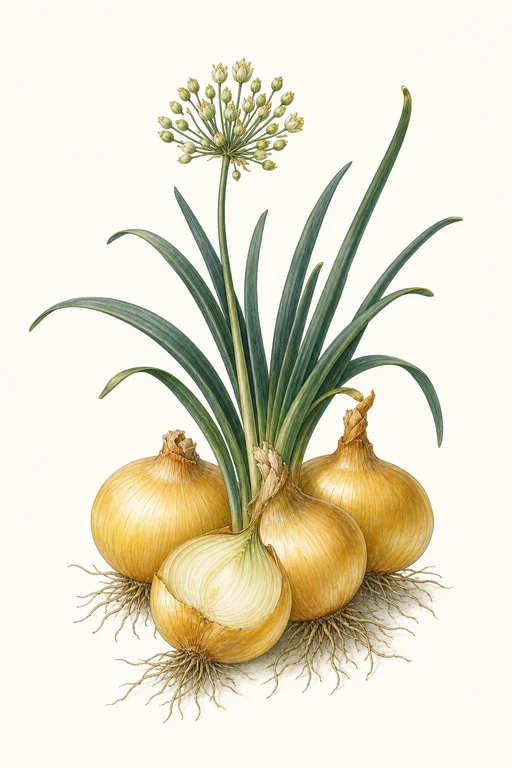
Golden globes with a luminous, sunlit sheen—Dakota Tears onions sweeten as they mature, offering a gentle bite and a juicy, crisp snap when you slice into their layered flesh.
The bulbs form with a classic yellow skin and a tight, well-filled interior that roasts beautifully for caramelized depth, while also shining fresh for bright, aromatic flavor in salads and salsas. Grow Dakota Tears for reliable, storage-minded harvests at about 100 days, with the kind of dependable performance that keeps your pantry feeling abundant long after the season turns.
Light: Full SunMaturity: 100 DaysHabit: Bulbing
Location not set yet
Location not set yet
Enter your ZIP for local crop dates
Dakota Tears Planting Dates by USDA Zone
Estimated US hardiness-zone windows for sow, transplant, and harvest. Enter a US ZIP above for exact local dates, or open a zone below.
| Zone | Start Indoors | Sow / Transplant | Harvest |
|---|---|---|---|
| Zone 1a | Protected Environment Only | ||
| Zone 1b | Protected Environment Only | ||
| Zone 2a | Protected Environment Only | ||
| Zone 2b | Direct Sow | May 8th | Aug 16th – Aug 25th |
| Zone 3a | Direct Sow | May 8th | Aug 16th – Sep 1st |
| Zone 3b | Direct Sow | May 12th | Aug 20th – Sep 21st |
| Zone 4a | Direct Sow | May 8th | Aug 16th – Sep 24th |
| Zone 4b | Direct Sow | May 6th | Aug 14th – Sep 27th |
| Zone 5a | Direct Sow | May 1st | Aug 9th – Sep 30th |
| Zone 5b | Direct Sow | Apr 27th | Aug 5th – Oct 5th |
| Zone 6a | Direct Sow | Apr 24th | Aug 2nd – Oct 10th |
| Zone 6b | Direct Sow | Apr 18th | Jul 27th – Oct 16th |
| Zone 7a | Direct Sow | Apr 13th | Jul 22nd – Oct 20th |
| Zone 7b | Direct Sow | Apr 3rd | Jul 12th – Oct 28th |
| Zone 8a | Direct Sow | Mar 25th | Jul 3rd – Nov 5th |
| Zone 8b | Direct Sow | Mar 16th | Jun 24th – Nov 12th |
| Zone 9a | Direct Sow | Feb 27th | Jun 7th – Nov 26th |
| Zone 9b | Direct Sow | Feb 2nd | May 13th – Dec 9th |
| Zone 10a | — | Oct 1st | Jan 9th – Feb 28th |
| Zone 10b | — | Oct 1st | Jan 9th – Feb 28th |
| Zone 11a | — | Oct 1st | Jan 9th – Feb 28th |
| Zone 11b | — | Oct 1st | Jan 9th – Feb 28th |
| Zone 12a | — | Oct 1st | Jan 9th – Feb 28th |
| Zone 12b | — | Oct 1st | Jan 9th – Feb 28th |
| Zone 13a | — | Oct 1st | Jan 9th – Feb 28th |
| Zone 13b | — | Oct 1st | Jan 9th – Feb 28th |
Crop Details
| Trait | Value |
|---|---|
| Days to Maturity | 100 |
| Sun Requirements | Full Sun |
| Growth Habit | Bulbing |
| Support Needed | None |
| Planting Depth | Normal |
| Germination Temp (°F) | 70 |
| Min Soil Temp (°F) | 45 |
| Min Night Temp (°F) | 28 |
| Harden Off (days) | 7 |
Culinary Notes

Chef's Note
Dakota Tears reads like a classic yellow onion but behaves like a sweeter one once it’s matured—slice it for a watery-crisp crunch, or give it time and heat and it turns into glossy, evenly browned caramel. It’s the kind of onion that won’t bulldoze a dish with harshness, making it equally at home under gruyère or in a slow-reduced gravy.

Best Uses
- caramelizing and jammy onion builds for burgers and steak toppings
- slow-roasting or oven-braising until jam-thick and spoonable
- thin slicing for crisp salads where it stays juicy, not sharp
- frying/roasting for sweet-savory salsas and relish when you want some texture left intact

Flavor Profile

Kitchen Pairings
Frequently Asked Questions
What pest or disease problem is most common for Allium cepa (Dakota Tears) onions, and how can I prevent or treat it?
How often should I water Allium cepa during the main growing phase?
How do I tell when Dakota Tears onions are ready to harvest?
Sowing Tips

Transplant Conditions
Wait until soil reaches 45°F and nights stay above 28°F before moving outdoors. Harden off for 7 days first.
Expert Note

For hardy northern alliums, prioritize consistent moisture early and avoid nitrogen overload to promote firm bulbs for long storage.