
Dutch Red
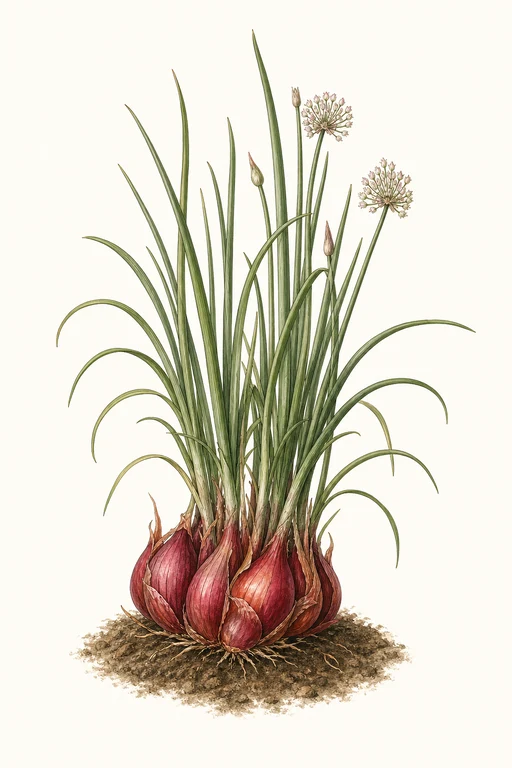
Aromatic and richly pungent, Dutch Red shallots bring a deep, rosy-bronze sweetness that lingers with a silky, tender bite.
At maturity, the bulbs form neatly layered cloves with a smooth, satiny skin and a compact, well-balanced shape—ideal for gardeners who want dependable flavor from a single planting. Grow Dutch Red for bold, elegant results in everyday savory preparations, from quick sautés to glossy sauces and tangy pickles.
Light: Full SunMaturity: 90 DaysHabit: Bulbing
Planting schedules and alerts are optimized for Columbus (Zone 6b).
Crop Dates
| Milestone | Date |
|---|---|
| Start Indoors | Direct Sow |
| Last Frost | Apr 25th |
| Transplant / Sow Outdoors | Apr 25th |
| Harvest Begins | Jul 24th |
| Harvest Ends | Oct 16th |
Crop Details
| Trait | Value |
|---|---|
| Days to Maturity | 90 |
| Sun Requirements | Full Sun |
| Growth Habit | Bulbing |
| Support Needed | None |
| Planting Depth | Normal |
| Germination Temp (°F) | 70 |
| Min Soil Temp (°F) | 45 |
| Min Night Temp (°F) | 28 |
| Harden Off (days) | Not Required |
Culinary Notes

Chef's Note
Dutch Red leans into that classic shallot move: pungency up front, then a sweet, rosy softness that turns silky when cooked just long enough. It’s the kind of shallot that doesn’t just flavor—it gives you a tender, glossy texture in reductions and a crisp, tangy snap when pickled.

Best Uses
- fast skillet sauté where it turns glossy without going sharp
- glossy reduction sauces (pan sauces, shallot-wine reductions)
- quick pickling for tangy, rosy-sweet crunch
- finishing on warm potatoes, eggs, or steak for a clean, lingering allium perfume

Flavor Profile

Kitchen Pairings
Frequently Asked Questions
What pest or disease commonly affects Allium cepa var. aggregatum (French Red/Dutch Red onion), and how can I control it?
How often should I water during the main growing phase for Allium cepa var. aggregatum?
How do I know when Dutch Red (Allium cepa var. aggregatum) is ready to harvest?
Sowing Tips

Transplant Conditions
Wait until soil reaches 45°F and nights stay above 28°F before moving outdoors.
Expert Note

For best shallot bulbs, keep the soil evenly moist during bulbing and avoid letting weeds compete after plants reach a few inches tall.