
Dutch Yellow Multiplier
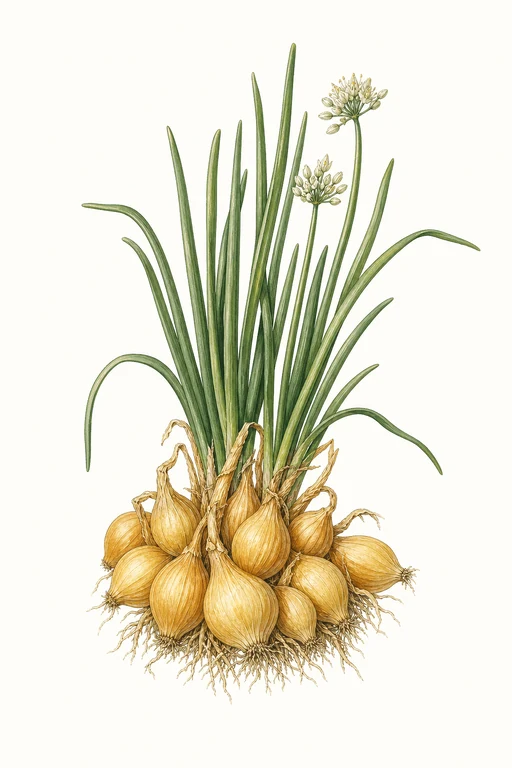
Sunlit and richly aromatic, Dutch Yellow Multiplier shallots form clusters of warm golden bulbs with a silky, paper-thin skin that slips away to reveal tender, honeyed flesh.
Their flavor is bright and mellow—ideal for turning everyday dishes into something quietly luxurious—while the multiplying habit rewards gardeners with a generous harvest over the season. Grow Dutch Yellow Multiplier for its dependable, clump-forming performance and its elegant, golden presence in the pantry and beyond.
Light: Full SunMaturity: 90 DaysHabit: Bulbing
Planting schedules and alerts are optimized for Columbus (Zone 6b).
Crop Dates
| Milestone | Date |
|---|---|
| Start Indoors | Direct Sow |
| Last Frost | Apr 25th |
| Transplant / Sow Outdoors | Apr 25th |
| Harvest Begins | Jul 24th |
| Harvest Ends | Oct 16th |
Crop Details
| Trait | Value |
|---|---|
| Days to Maturity | 90 |
| Sun Requirements | Full Sun |
| Growth Habit | Bulbing |
| Support Needed | None |
| Planting Depth | Normal |
| Germination Temp (°F) | 70 |
| Min Soil Temp (°F) | 40 |
| Min Night Temp (°F) | 28 |
| Harden Off (days) | Not Required |
Culinary Notes

Chef's Note
These multiplier shallots cook up silky and sweet without turning sharp, so they’re especially good for fast sautéed bases and emulsions where you want the allium to behave. With their honeyed, tender flesh, they caramelize at the edges but stay delicate in the center—no crying into the fryer required.

Best Uses
- finely minced raw in vinaigrettes and quick relishes (no harsh bite)
- slow-sweated base for pan sauces and ragùs where you want silk, not sharpness
- shallow-roasted or confit-style for jammy edges and buttery interiors
- thin slicing for warm salads and buttery skillet tosses

Flavor Profile

Kitchen Pairings
Frequently Asked Questions
Why are my Allium cepa var. aggregatum (Dutch Yellow multiplier onion) plants developing yellow tips and soft stems, and what should I do?
How often should I water Dutch Yellow multiplier onions during the 90-day growing period?
How do I know when Dutch Yellow multiplier onions are ready to harvest?
Sowing Tips

Transplant Conditions
Wait until soil reaches 40°F and nights stay above 28°F before moving outdoors.
Expert Note

Shallots (multiplier types) perform best when planted in cool weather and kept evenly moist until tops mature—avoid fertilizing late to reduce soft rot in storage.