
Dutch Yellow Shallot
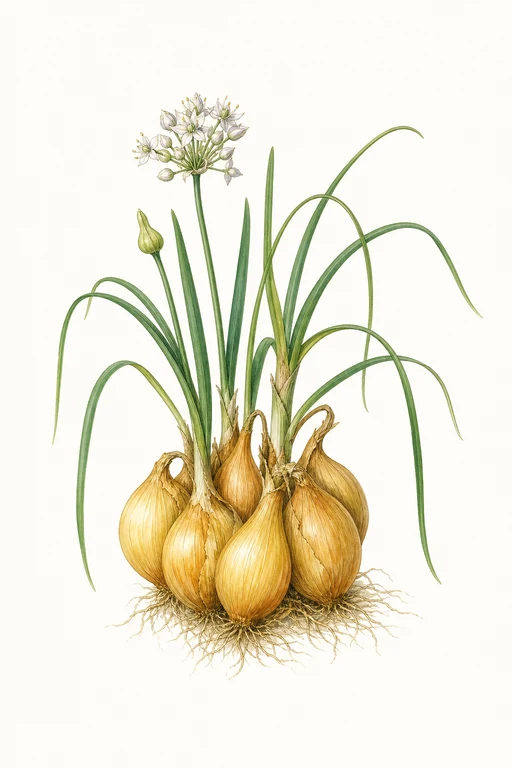
Sweetly fragrant and richly golden, Dutch Yellow Shallot forms elegant, oblong bulbs with a warm, papery sheen and a tender, fine-grained bite.
When lifted at maturity, the cloves separate into neat, buttery segments that lend a mellow, savory depth to everyday dishes—especially when roasted, folded into sauces, or pickled for bright, tangy relish. A dependable 90-day performer for gardeners who love reliable harvests and beautifully storied flavor from the first spoonful to the last jar.
Light: Full SunMaturity: 90 DaysHabit: Bulbing
Planting schedules and alerts are optimized for Columbus (Zone 6b).
Crop Dates
| Milestone | Date |
|---|---|
| Start Indoors | Direct Sow |
| Last Frost | Apr 25th |
| Transplant / Sow Outdoors | Apr 25th |
| Harvest Begins | Jul 24th |
| Harvest Ends | Oct 16th |
Crop Details
| Trait | Value |
|---|---|
| Days to Maturity | 90 |
| Sun Requirements | Full Sun |
| Growth Habit | Bulbing |
| Support Needed | None |
| Planting Depth | Normal |
| Germination Temp (°F) | 70 |
| Min Soil Temp (°F) | 45 |
| Min Night Temp (°F) | 35 |
| Harden Off (days) | Not Required |
Culinary Notes

Chef's Note
Dutch Yellow Shallot cooks down fast into a sweet, fragrant jam rather than a sharp allium. Use it when you want the flavor to round out—roasted or reduced—so the sweetness and buttery segments read clearly on the palate.

Best Uses
- dry-sauté and soften for a mellow base (no harsh bite)
- roast whole or halved until jammy at the edges
- fold into quick pan sauces for steak, pork, or chicken
- quick-pickle into tangy relish that stays crisp

Flavor Profile

Kitchen Pairings
Frequently Asked Questions
Why are my Dutch Yellow shallots developing spots or yellowing leaves, and what should I do?
How often should I water Dutch Yellow shallots during their main growing phase?
How can I tell when Dutch Yellow shallots are ready to harvest?
Sowing Tips

Transplant Conditions
Wait until soil reaches 45°F and nights stay above 35°F before moving outdoors.
Expert Note

For best Dutch shallot bulbs, plant in cool weather and keep soil evenly moist until bulbs begin to size up, then taper watering to help curing.