
Dutch Yellow
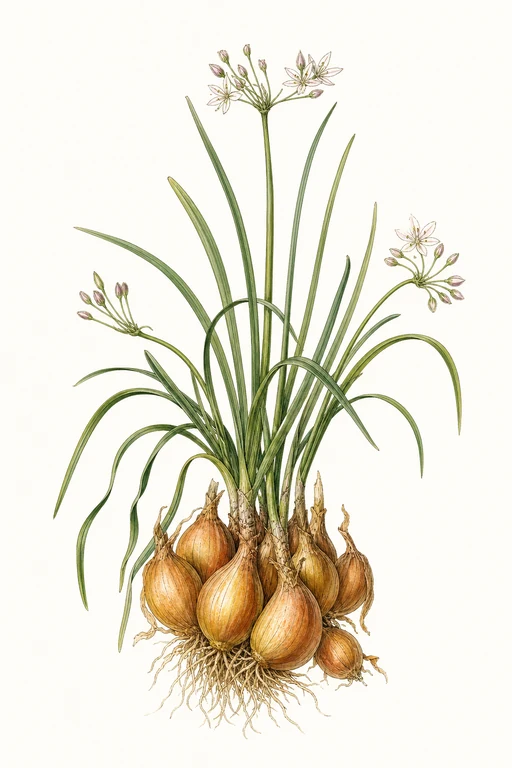
Sun-warmed and delicately sweet, Dutch Yellow shallots bring a bright, golden allure with a gentle bite and a silky, fine-grained texture.
At maturity they form neat, well-filled bulbs that roast up tender and mellow, while their crisp, aromatic character shines in fresh preparations and smooth sauces. Ideal for gardeners who love reliable, flavorful bulbs—Dutch Yellow rewards patience with a luminous harvest at about 120 days.
Light: Full SunMaturity: 120 DaysHabit: Bulbing
Planting schedules and alerts are optimized for Columbus (Zone 6b).
Crop Dates
| Milestone | Date |
|---|---|
| Start Indoors | Direct Sow |
| Last Frost | Apr 25th |
| Transplant / Sow Outdoors | Apr 25th |
| Harvest Begins | Aug 23rd |
| Harvest Ends | Oct 16th |
Crop Details
| Trait | Value |
|---|---|
| Days to Maturity | 120 |
| Sun Requirements | Full Sun |
| Growth Habit | Bulbing |
| Support Needed | None |
| Planting Depth | Normal |
| Germination Temp (°F) | 60 |
| Min Soil Temp (°F) | 45 |
| Min Night Temp (°F) | 35 |
| Harden Off (days) | Not Required |
Culinary Notes

Chef's Note
Dutch Yellow shallots give you that sweet, sunlit allium character without the harsh edge—fine-grained and silky enough to disappear into a reduction rather than turn sharp. They roast into a mellow, jammy gloss, but they still cut clean for fresh applications where you want bright bite and crisp texture.

Best Uses
- thin slicing for fresh vinaigrettes and quick marinades where they stay snappy
- slow-softening in butter until translucent, then stirring into silky pan sauces
- roasting whole or halved until tender and lacquered for a spoonable garnish
- mashing into potato/sunchoke-style purées for a fine, fragrant sheen

Flavor Profile

Kitchen Pairings
Frequently Asked Questions
My Allium cepa var. aggregatum (Dutch Yellow shallot/onion type) leaves are yellowing and falling over with a gray/purple mold near the neck—what pest/disease is this and what should I do?
How often should I water Dutch Yellow (Allium cepa var. aggregatum) during the main growing phase?
How can I tell when Dutch Yellow (Allium cepa var. aggregatum) is ready to harvest?
Sowing Tips

Transplant Conditions
Wait until soil reaches 45°F and nights stay above 35°F before moving outdoors.
Expert Note

Plant shallot sets (or small bulbs) in cool soil after the last frost, spacing to encourage tight clusters while keeping the tops just at/above the soil line.