
Dwarf Jewel Mix
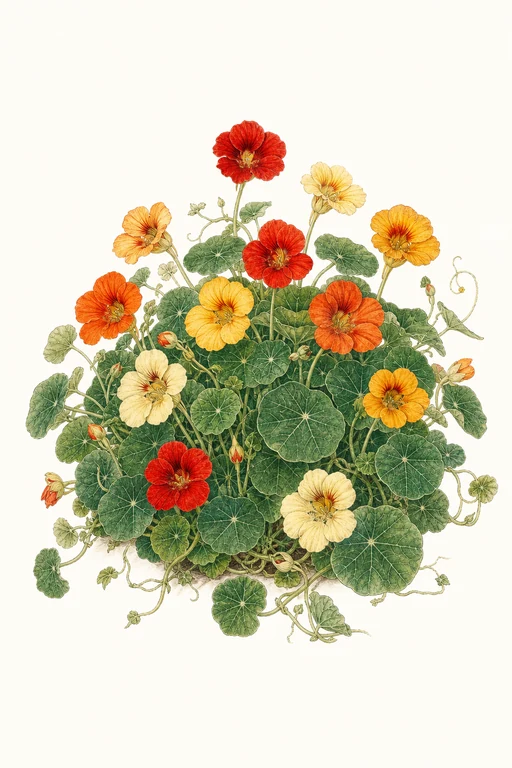
A riot of jewel-toned blooms—fiery scarlet, warm apricot, sunny yellow, and creamy white—tumbles over the garden with a peppery snap that’s as vivid as it looks.
Dwarf Jewel Mix forms compact, tidy plants with tender, succulent leaves and crisp, flavorful flowers, perfect for adding lively color and zing to fresh arrangements and garnishes. Grow it for a quick 50-day payoff: abundant blossoms that keep coming, with a delightful bite that shines in salads, spring mixes, and bright pickled accents.
Light: Full SunMaturity: 50 DaysHabit: Bush
Location not set yet
Location not set yet
Enter your ZIP for local crop dates
Dwarf Jewel Mix Planting Dates by USDA Zone
Estimated US hardiness-zone windows for sow, transplant, and harvest. Enter a US ZIP above for exact local dates, or open a zone below.
| Zone | Start Indoors | Sow / Transplant | Harvest |
|---|---|---|---|
| Zone 1a | Protected Environment Only | ||
| Zone 1b | Direct Sow | Jun 1st | Jul 21st – Aug 1st |
| Zone 2a | Direct Sow | May 25th | Jul 14th – Aug 29th |
| Zone 2b | Direct Sow | May 15th | Jul 4th – Aug 25th |
| Zone 3a | Direct Sow | May 15th | Jul 4th – Sep 1st |
| Zone 3b | Direct Sow | May 19th | Jul 8th – Sep 21st |
| Zone 4a | Direct Sow | May 15th | Jul 4th – Sep 24th |
| Zone 4b | Direct Sow | May 13th | Jul 2nd – Sep 27th |
| Zone 5a | Direct Sow | May 8th | Jun 27th – Sep 30th |
| Zone 5b | Direct Sow | May 4th | Jun 23rd – Oct 5th |
| Zone 6a | Direct Sow | May 1st | Jun 20th – Oct 10th |
| Zone 6b | Direct Sow | Apr 25th | Jun 14th – Oct 16th |
| Zone 7a | Direct Sow | Apr 20th | Jun 9th – Oct 20th |
| Zone 7b | Direct Sow | Apr 10th | May 30th – Oct 28th |
| Zone 8a | Direct Sow | Apr 1st | May 21st – Nov 5th |
| Zone 8b | Direct Sow | Mar 23rd | May 12th – Nov 12th |
| Zone 9a | Direct Sow | Mar 6th | Apr 25th – Nov 26th |
| Zone 9b | Direct Sow | Feb 9th | Mar 31st – Dec 9th |
| Zone 10a | — | Oct 1st | Nov 20th – Feb 28th |
| Zone 10b | — | Oct 1st | Nov 20th – Feb 28th |
| Zone 11a | — | Oct 1st | Nov 20th – Feb 28th |
| Zone 11b | — | Oct 1st | Nov 20th – Feb 28th |
| Zone 12a | — | Oct 1st | Nov 20th – Feb 28th |
| Zone 12b | — | Oct 1st | Nov 20th – Feb 28th |
| Zone 13a | — | Oct 1st | Nov 20th – Feb 28th |
| Zone 13b | — | Oct 1st | Nov 20th – Feb 28th |
Crop Details
| Trait | Value |
|---|---|
| Days to Maturity | 50 |
| Sun Requirements | Full Sun |
| Growth Habit | Bush |
| Support Needed | None |
| Planting Depth | Normal |
| Germination Temp (°F) | 70 |
| Min Soil Temp (°F) | 55 |
| Min Night Temp (°F) | 40 |
| Harden Off (days) | Not Required |
Culinary Notes

Chef's Note
These dwarf nasturtium blooms bring a vivid peppery crunch without the harshness—more juicy snap than sharp spice. They’re at their best as a last-second garnish (or quick pickle) so the petals stay crisp and the bite stays lively.

Best Uses
- scatter blossoms over bitter greens and lettuces
- tuck into spring mix right before serving to keep their snap
- use as a bright garnish for soups and grain bowls
- quick-pickle petals or flower stems for punchy, spicy accoutrement

Flavor Profile

Kitchen Pairings
Frequently Asked Questions
What pests or diseases commonly affect Tropaeolum majus (dwarf jewel mix), and how can I treat them?
How often should I water Tropaeolum majus during its main growing phase?
How can I tell when Tropaeolum majus is ready to harvest?
Sowing Tips

Transplant Conditions
Wait until soil reaches 55°F and nights stay above 40°F before moving outdoors.
Expert Note

Sow nasturtium seed directly after frost (cool soil slows growth) and avoid nitrogen-heavy fertilizer to keep plants compact and flowering.