
Ed's Red
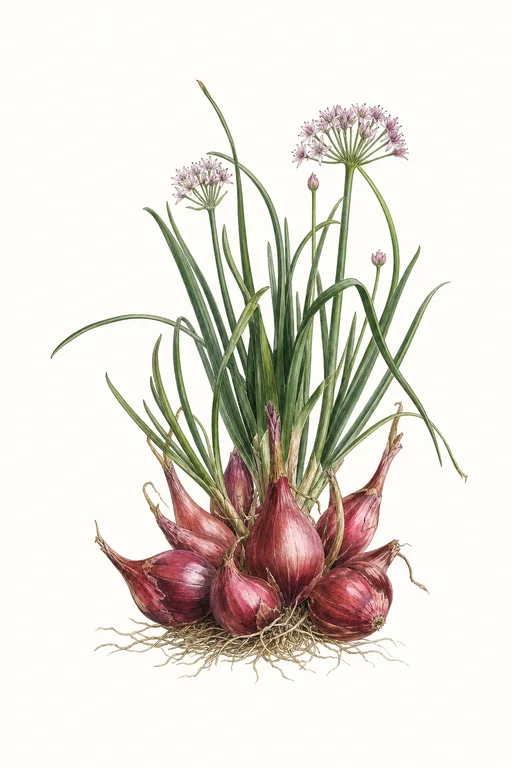
Sweetly pungent and richly aromatic, Ed’s Red shallot brings a silky, tender bite with a warm, coppery-red skin that peels back to reveal pale, creamy flesh.
At maturity, the bulbs form neat clusters that roast up beautifully, while their delicate flavor shines in fresh preparations and quick pickles—ideal for gardeners who love bold yet refined depth. Grow Ed’s Red for a dependable, garden-to-table favorite that rewards attention with elegant, long-storing bulbs.
Light: Full SunMaturity: 90 DaysHabit: Bulbing
Planting schedules and alerts are optimized for Columbus (Zone 6b).
Crop Dates
| Milestone | Date |
|---|---|
| Start Indoors | Direct Sow |
| Last Frost | Apr 25th |
| Transplant / Sow Outdoors | Apr 25th |
| Harvest Begins | Jul 24th |
| Harvest Ends | Oct 16th |
Crop Details
| Trait | Value |
|---|---|
| Days to Maturity | 90 |
| Sun Requirements | Full Sun |
| Growth Habit | Bulbing |
| Support Needed | None |
| Planting Depth | Normal |
| Germination Temp (°F) | 70 |
| Min Soil Temp (°F) | 45 |
| Min Night Temp (°F) | 35 |
| Harden Off (days) | Not Required |
Culinary Notes

Chef's Note
Ed’s Red shallot is built for clean, fast conversion: raw it snaps tenderly without going harsh, but heat turns that sweet-pungent edge into a jammy, roasty fragrance. It’s the kind of allium that holds its own in quick pickles and gives your sauté bases a noticeably sweeter, silkier finish.

Best Uses
- thin raw slices in vinaigrette-dressed salads or on charred bread
- quick pickles for a sharp, rosy crunch
- roasted wedges for jammy caramelization
- fast sauté base for pan sauce and braises

Flavor Profile

Kitchen Pairings
Frequently Asked Questions
What pest or disease most commonly affects Allium cepa (Ed’s Red) onions, and how can I prevent it?
How often should I water Ed’s Red onions during the main growing phase?
How do I know when Ed’s Red onions are ready to harvest?
Sowing Tips

Transplant Conditions
Wait until soil reaches 45°F and nights stay above 35°F before moving outdoors.
Expert Note

For shallots, plant sets/seed where soil is cool-to-mild in spring, keep early weeds down, and let tops yellow before lifting for best storage.