
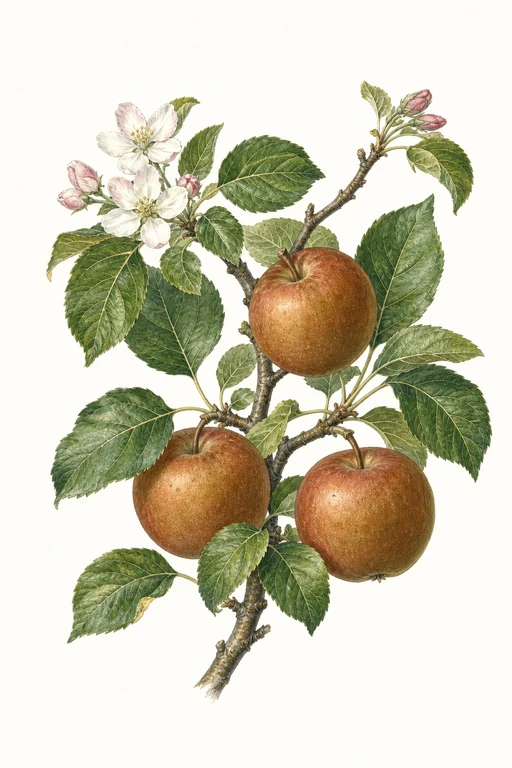
Egremont Russet
Warm russet skin with a softly blushed, sun-kissed glow—Egremont Russet delivers a fragrant, honeyed bite that feels both crisp and richly mellow.
The flesh is fine-grained and juicy, with a balanced sweetness that lingers beautifully after each taste. A standout for fresh enjoyment and for turning into fragrant preserves and spiced cider-style favorites when you want that classic russet character in every jar.
Light: Full SunHabit: Shrub
Planting schedules and alerts are optimized for Columbus (Zone 6b).
Crop Dates
| Milestone | Date |
|---|---|
| Start Indoors | Direct Sow |
| Last Frost | Apr 25th |
| Transplant / Sow Outdoors | Apr 25th |
| Harvest Begins | Apr 25th |
| Harvest Ends | Oct 16th |
Crop Details
| Trait | Value |
|---|---|
| Days to Maturity | N/A |
| Sun Requirements | Full Sun |
| Growth Habit | Shrub |
| Support Needed | None |
| Planting Depth | Normal |
| Germination Temp (°F) | N/A |
| Min Soil Temp (°F) | N/A |
| Min Night Temp (°F) | N/A |
| Harden Off (days) | Not Required |
Culinary Notes

Chef's Note
Egremont Russet eats like a crisp, perfumed bite—fine-grained and juicy with a honeyed balance that doesn’t fall apart under gentle heat. It’s the kind of russet that gives you fragrant preserves and a spiced cider aroma that actually tastes like the fruit, not just sugar.

Best Uses
- thin slices on nutty cheeses where it stays snappy (no mushy collapse)
- spiced cider-style simmering for a fragrant, rounded cup
- soft-set preserves where the fine grain gives a silky jam texture
- roasted apple wedges with butter to coax out a deeper russet caramel note

Flavor Profile

Kitchen Pairings
Frequently Asked Questions
What’s a common disease for Malus domestica (apple) like Egremont Russet, and how do I control it at home?
How often should I water Malus domestica during the main growing phase?
How can I tell when Egremont Russet (Malus domestica) is ready to harvest?
Expert Note

Plant apple trees in full sun with well-drained soil, and expect the biggest harvest payoff after proper root establishment and annual pruning.