
Evergreen White Bunching
Evergreen White Bunching opens with a crisp, cool snap and a clean, gently sweet onion fragrance that lingers like fresh-cut stems.
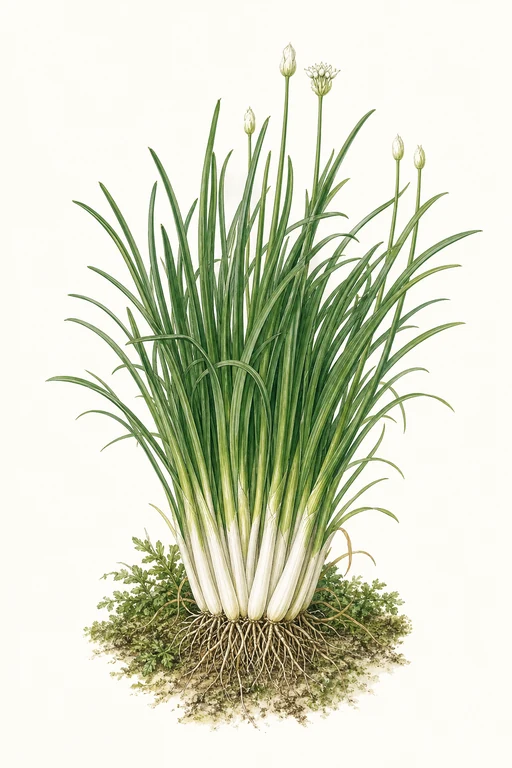
At about 45 days, it forms tidy, upright bunches of white, tender cylinders with a bright, green top—silky-smooth to the touch and wonderfully mild in flavor. Ideal for fresh bunching, it shines in spring salads, garnishes, and quick stir-ins, and it also makes a lovely, aromatic base for sauces and pickles when you want that fresh onion lift.
Light: Full SunMaturity: 45 DaysHabit: Upright
Planting schedules and alerts are optimized for Columbus (Zone 6b).
Crop Dates
| Milestone | Date |
|---|---|
| Start Indoors | Direct Sow |
| Last Frost | Apr 25th |
| Transplant / Sow Outdoors | Apr 25th |
| Harvest Begins | Jun 9th |
| Harvest Ends | Oct 16th |
Crop Details
| Trait | Value |
|---|---|
| Days to Maturity | 45 |
| Sun Requirements | Full Sun |
| Growth Habit | Upright |
| Support Needed | None |
| Planting Depth | Normal |
| Germination Temp (°F) | 70 |
| Min Soil Temp (°F) | 40 |
| Min Night Temp (°F) | 28 |
| Harden Off (days) | Not Required |
Culinary Notes

Chef's Note
This bunching onion stays mild while giving you that crisp, fresh-cut onion snap—especially from the white cylinders—so it doesn’t bully delicate greens or eggs. Shave it fine for salads or toss it in at the last moment so it stays silky and snappy instead of going soft and sulfurous.

Best Uses
- thinly sliced spring salads and crunchy garnish piles
- quick stir-ins at the end to keep the snap
- whisked into a light sauce or pan glaze for fresh onion lift
- fast pickles or quick-brined “refrigerator onion” style accents

Flavor Profile

Kitchen Pairings
Frequently Asked Questions
What pest or disease commonly affects Allium fistulosum (evergreen bunching/scallion-type) and how can I prevent it?
How often should I water Allium fistulosum during the main growing phase?
How do I tell when Allium fistulosum is ready to harvest?
Sowing Tips

Transplant Conditions
Wait until soil reaches 40°F and nights stay above 28°F before moving outdoors.
Expert Note

For the longest continuous harvest, sow/plant in batches every 2–3 weeks and keep soil evenly moist until established.