
Exhibition
Experience Exhibition shallot’s richly aromatic, honeyed depth—its flavor blooms with a gentle sweetness and a clean, savory edge that lingers beautifully.
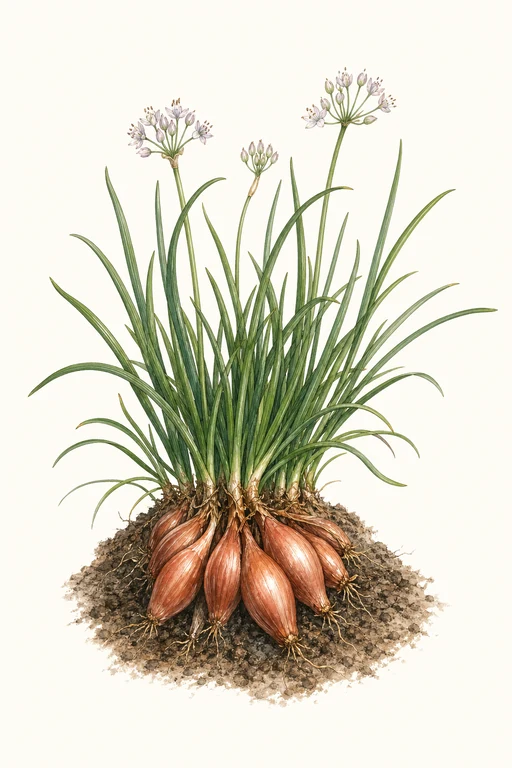
At maturity, bulbs form well-filled, elongated clusters with a smooth, satiny skin and a firm, fine-grained interior that shines when used for bold, fragrant preparations. Grow Exhibition for dependable, showy harvests that elevate sauces, pickles, and slow-simmered favorites with unmistakable shallot character.
Light: Full SunMaturity: 120 DaysHabit: Bulbing
Planting schedules and alerts are optimized for Columbus (Zone 6b).
Crop Dates
| Milestone | Date |
|---|---|
| Start Indoors | Direct Sow |
| Last Frost | Apr 25th |
| Transplant / Sow Outdoors | Apr 25th |
| Harvest Begins | Aug 23rd |
| Harvest Ends | Oct 16th |
Crop Details
| Trait | Value |
|---|---|
| Days to Maturity | 120 |
| Sun Requirements | Full Sun |
| Growth Habit | Bulbing |
| Support Needed | None |
| Planting Depth | Normal |
| Germination Temp (°F) | 60 |
| Min Soil Temp (°F) | 45 |
| Min Night Temp (°F) | 28 |
| Harden Off (days) | Not Required |
Culinary Notes

Chef's Note
Exhibition shallots bring a sweet, aromatic burn that turns silky fast—ideal when you want that unmistakable onion-gold perfume without stringy texture. Use them chopped small in hot fat or reduced in wine-vinegar so their honeyed edge lingers clean on the palate.

Best Uses
- finely chopped for pan-sautéing to build a fragrant base for pan sauces
- slow-simmered reductions where it melts into silk
- quick pickles that stay snappy with a sweet-sharp edge
- raw preparations like thin shaving in vinaigrettes or onto warm potatoes

Flavor Profile

Kitchen Pairings
Frequently Asked Questions
What’s a common problem for Allium oschaninii (shallot) and how do I manage it?
How often should I water Allium oschaninii during the main growing phase?
How can I tell when Allium oschaninii is ready to harvest?
Sowing Tips

Transplant Conditions
Wait until soil reaches 45°F and nights stay above 28°F before moving outdoors.
Expert Note

Plant shallot sets/mini-bulbs in well-drained soil as soon as the ground is workable, then avoid nitrogen-heavy feeding to keep bulbs uniform.