
French Fingerling
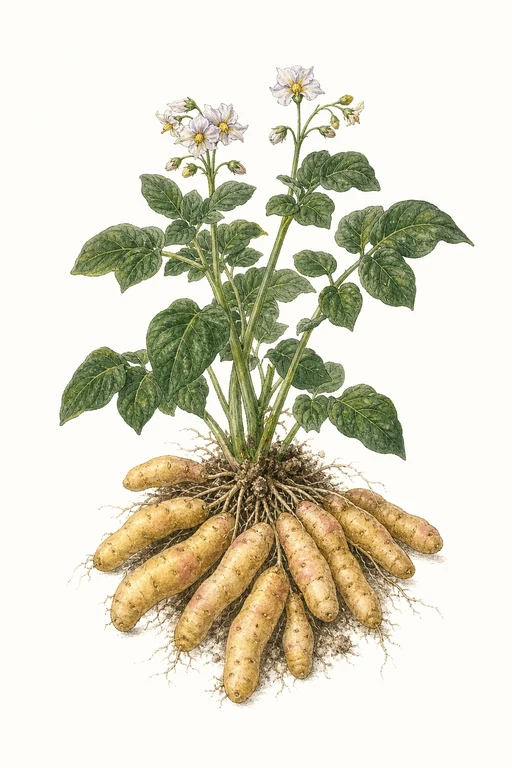
Velvety, golden-skin fingerlings with a softly waxy sheen and a pleasantly nutty, buttery flavor—French Fingerling delivers a gourmet bite straight from the garden.
The slender, evenly sized tubers roast to a crisp, bronzed exterior while the interior stays tender and creamy, ideal for showcasing in simple, elegant preparations. Grow them for their uniform, hand-sized charm and reliable performance through a full 85-day season.
Light: Full SunMaturity: 85 DaysHabit: Upright
Crop Dates : 7a
| Milestone | Date |
|---|---|
| Start Indoors | Direct Sow |
| Last Frost | Apr 20th |
| Transplant / Sow Outdoors | Apr 20th |
| Harvest Begins | Jul 14th |
| Harvest Ends | Oct 20th |
Crop Details
| Trait | Value |
|---|---|
| Days to Maturity | 85 |
| Sun Requirements | Full Sun |
| Growth Habit | Upright |
| Support Needed | None |
| Planting Depth | Normal |
| Germination Temp (°F) | 70 |
| Min Soil Temp (°F) | 45 |
| Min Night Temp (°F) | 35 |
| Harden Off (days) | Not Required |
Culinary Notes

Chef's Note
French Fingerling’s nutty, buttery pull and velvety waxiness make it a show-off potato: roast hot for that bronzed crackle outside while the centers stay tender and creamy. Keep seasonings bright—lemon zest or mustard—so it doesn’t tip into heavy, starchy sweetness.

Best Uses
- hot-pan or sheet-pan roast until deeply browned and creamy in the center
- split and sear-flat for a crunchy, lacy crust
- toss in herb-forward warm potato salad where the skin stays intact
- lightly dressed warm fingerling “gratin” with lots of black pepper

Flavor Profile

Kitchen Pairings
Frequently Asked Questions
What pest or disease most often affects Solanum tuberosum (French Fingerling) and how can I control it?
How often should I water French Fingerling potatoes during their main growing phase?
How do I know when French Fingerling potatoes (Solanum tuberosum) are ready to harvest?
Sowing Tips

Transplant Conditions
Wait until soil reaches 45°F and nights stay above 35°F before moving outdoors.
Expert Note

Plant certified seed potatoes in cool, well-drained soil and keep them evenly moist while avoiding deep waterlogging to prevent tuber problems.