
Frisee De Beauregard
Lacy, ruffled fronds unfurl in a cool-weather crescendo, their crisp bite and tender, pleasantly bitter edge coming through with striking clarity.
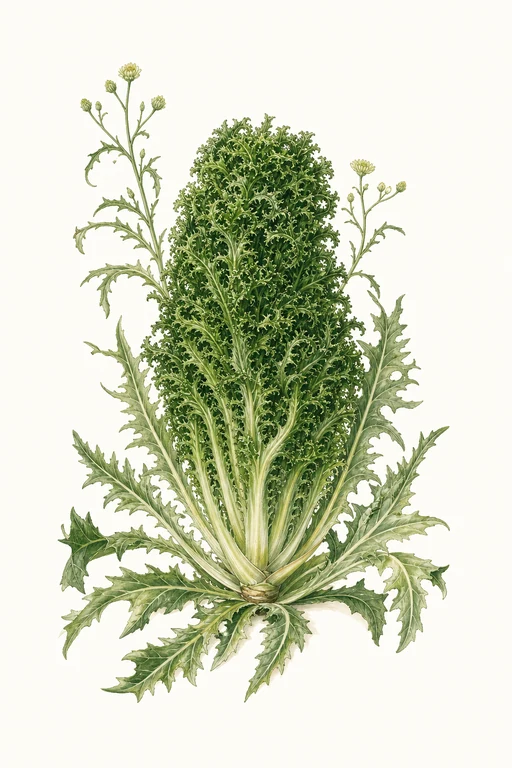
Frisee De Beauregard forms compact, upright heads of tight, curly green that hold their texture beautifully from garden to table, ideal for fresh salads and elegant garnishes. Grow it for a refined, old-world endive character—bold enough to stand on its own, yet perfectly suited to dressings, sauces, and quick pickling-style preparations.
Light: Full SunMaturity: 55 DaysHabit: Rosette
Planting schedules and alerts are optimized for Columbus (Zone 6b).
Crop Dates
| Milestone | Date |
|---|---|
| Start Indoors | Direct Sow |
| Last Frost | Apr 25th |
| Transplant / Sow Outdoors | Apr 25th |
| Harvest Begins | Jun 19th |
| Harvest Ends | Oct 16th |
Crop Details
| Trait | Value |
|---|---|
| Days to Maturity | 55 |
| Sun Requirements | Full Sun |
| Growth Habit | Rosette |
| Support Needed | None |
| Planting Depth | Surface |
| Germination Temp (°F) | 70 |
| Min Soil Temp (°F) | 45 |
| Min Night Temp (°F) | 32 |
| Harden Off (days) | Not Required |
Culinary Notes

Chef's Note
This frisee brings a high-voltage bitter edge with a crackly, ruffled crunch, so it wants acidic dressings and salty fats that can grab onto every fold. Use it fresh for maximum snap, or wilt it briefly in butter to turn the bitterness sweeter without losing the lacy bite.

Best Uses
- shaved frisee salads dressed with Dijon vinaigrette (let it cling, not wilt)
- classic frisee with poached egg and bacon/anchovy-style salty fat
- quick sauté in butter with garlic for a controlled, mellowed bitterness
- tossed into soups and braises late to keep the texture lacy

Flavor Profile

Kitchen Pairings
Frequently Asked Questions
What’s a common pest or disease for Cichorium endivia (frisée) and how do I control it?
How often should I water frisée (Cichorium endivia) during the main growing phase?
How can I tell when frisée (Cichorium endivia) is ready to harvest?
Sowing Tips

Transplant Conditions
Wait until soil reaches 45°F and nights stay above 32°F before moving outdoors.
Expert Note

For crisp, lightly bitter leaves, keep soil consistently moist and harvest before prolonged summer heat; early sowings give the best texture.