
Frisee Tres Fin Mottis Green
Tender, frilly fronds unfurl in a vivid mottled green—crisp to the touch with a lively, pleasantly bitter snap that lingers like fresh garden air.
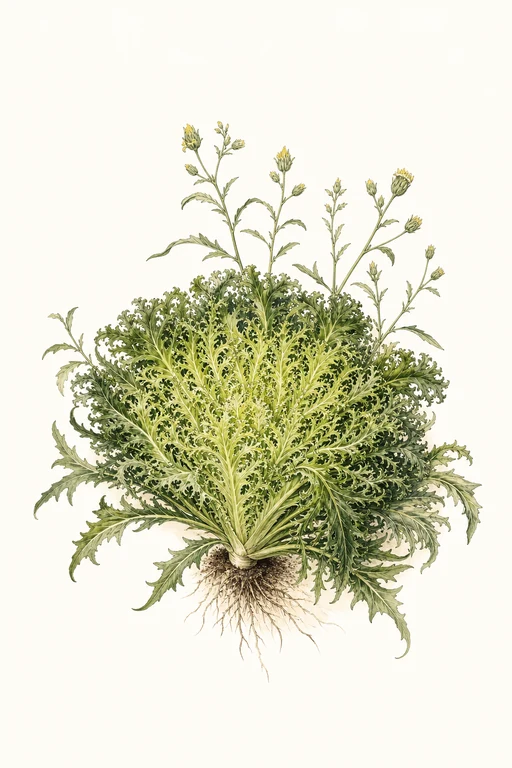
Frisee Tres Fin Mottis Green forms an elegant rosette of tightly curled leaves, building a dense texture that holds beautifully for salads and refined garnishes. Grow it for its distinctive look and its bold, classic frisée character—ideal for fresh use, bright vinaigrettes, and striking platter accents.
Light: Full SunMaturity: 50 DaysHabit: Rosette
Planting schedules and alerts are optimized for Columbus (Zone 6b).
Crop Dates
| Milestone | Date |
|---|---|
| Start Indoors | Direct Sow |
| Last Frost | Apr 25th |
| Transplant / Sow Outdoors | Apr 18th |
| Harvest Begins | Jun 7th |
| Harvest Ends | Oct 16th |
Crop Details
| Trait | Value |
|---|---|
| Days to Maturity | 50 |
| Sun Requirements | Full Sun |
| Growth Habit | Rosette |
| Support Needed | None |
| Planting Depth | Normal |
| Germination Temp (°F) | 70 |
| Min Soil Temp (°F) | 40 |
| Min Night Temp (°F) | 30 |
| Harden Off (days) | 6 |
Culinary Notes

Chef's Note
This frisée has a clean bitter edge and tight, crisp structure, so it holds dressing instead of collapsing like softer lettuces. Treat it like a refined crunchy foil—sharp vinaigrette, salty cheese, and fatty proteins make the bitterness taste intentional, not harsh.

Best Uses
- raw salad bases that can take a punchy vinaigrette
- tucking into composed plates for contrast—radicchio/bitter-supporting crunch
- quick wilt in warm (not boiling) reductions to soften the bite without turning mushy

Flavor Profile

Kitchen Pairings
Frequently Asked Questions
What pest or disease is most likely on Cichorium endivia (frisée), and how do I treat it?
How often should I water frisée (Cichorium endivia) during its main growing phase?
How can I tell when frisée (Cichorium endivia) is ready to harvest?
Sowing Tips

Transplant Conditions
Wait until soil reaches 40°F and nights stay above 30°F before moving outdoors. Harden off for 6 days first.
Expert Note

For best frisée texture, grow in cool weather and harvest before deep heat triggers bitterness and loose growth.