
Frisee
Frisee endive brings a crisp, lively crunch with a pleasantly bitter edge and a delicate, nutty sweetness that lingers on the palate.
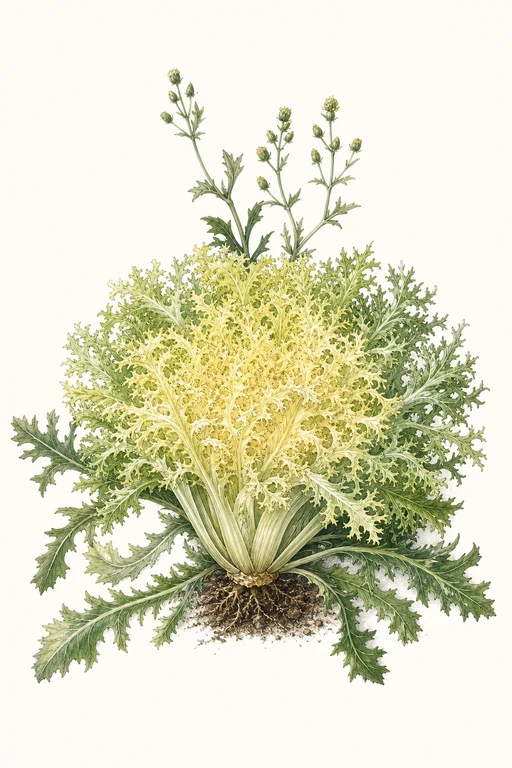
Its tightly ruffled, feathery heads form a dense rosette of pale green to creamy yellow leaves, delivering a fine, tender texture that stays crisp from garden to bowl. Grow Frisee for elegant fresh salads and for stirring into warm sautés and savory sauces, where its distinctive frill and brightness shine.
Light: Part SunMaturity: 55 DaysHabit: Rosette
Planting schedules and alerts are optimized for Columbus (Zone 6b).
Crop Dates
| Milestone | Date |
|---|---|
| Start Indoors | Direct Sow |
| Last Frost | Apr 25th |
| Transplant / Sow Outdoors | Apr 18th |
| Harvest Begins | Jun 12th |
| Harvest Ends | Oct 16th |
Crop Details
| Trait | Value |
|---|---|
| Days to Maturity | 55 |
| Sun Requirements | Part Sun |
| Growth Habit | Rosette |
| Support Needed | None |
| Planting Depth | Normal |
| Germination Temp (°F) | 60 |
| Min Soil Temp (°F) | 40 |
| Min Night Temp (°F) | 32 |
| Harden Off (days) | 6 |
Culinary Notes

Chef's Note
Frisee’s ruffled leaves bring crisp texture and a clean, bitter edge that lifts anything heavy on the plate—think lemony vinaigrettes and porky fats. Because it stays lively and crunchy, it’s best added early only in dressings that can coat without soaking it into mush.

Best Uses
- tossed salads with a sharp vinaigrette that clings to ruffles
- warm sauté or skillet toss where it wilts quickly but keeps some bite
- thin shaving as a topper for rich, fatty mains (won’t get lost)
- stirring into savory braises/sauces near the end for brightness

Flavor Profile

Kitchen Pairings
Frequently Asked Questions
What’s the most common frisée (Cichorium endivia) pest or disease, and how do I treat it?
How often should I water frisée during the main growing phase?
How do I know when frisée (Cichorium endivia) is ready to harvest?
Sowing Tips

Transplant Conditions
Wait until soil reaches 40°F and nights stay above 32°F before moving outdoors. Harden off for 6 days first.
Expert Note

For the most tender frisee, grow through cool weather and blanch by tying leaves about 2 weeks before harvest.