
Garnet
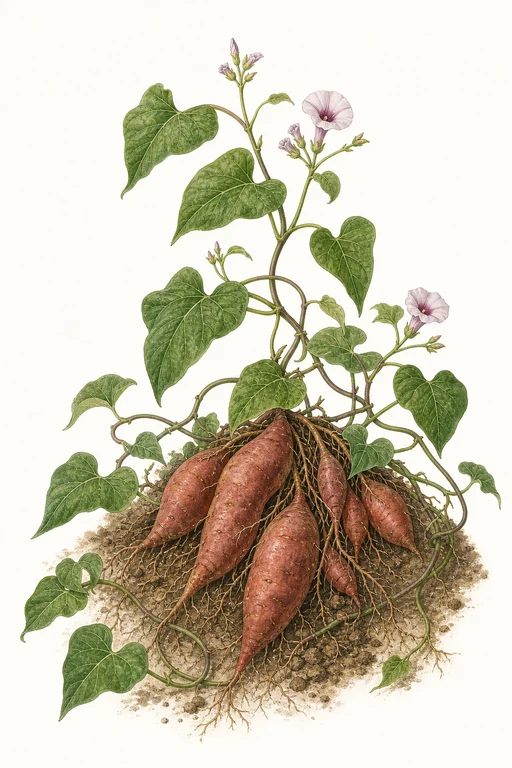
Velvety, garnet-orange flesh with a luminous, honeyed sweetness—Garnet sweet potato delivers a rich, creamy texture that feels almost custard-smooth when roasted.
Its deep orange color holds beautifully, making it a standout for mashing, puréeing, and hearty casseroles, while its naturally sweet character shines in savory-sweet sauces and pickled preparations. Grow Garnet for a dependable 90-day harvest and a harvest basket that looks as vibrant as it tastes.
Light: Full SunMaturity: 90 DaysHabit: Vine
Planting schedules and alerts are optimized for Columbus (Zone 6b).
Crop Dates
| Milestone | Date |
|---|---|
| Start Indoors | Direct Sow |
| Last Frost | Apr 25th |
| Transplant / Sow Outdoors | Apr 25th |
| Harvest Begins | Jul 24th |
| Harvest Ends | Oct 16th |
Crop Details
| Trait | Value |
|---|---|
| Days to Maturity | 90 |
| Sun Requirements | Full Sun |
| Growth Habit | Vine |
| Support Needed | Trellis |
| Planting Depth | Normal |
| Germination Temp (°F) | 75 |
| Min Soil Temp (°F) | 65 |
| Min Night Temp (°F) | 55 |
| Harden Off (days) | Not Required |
Culinary Notes

Chef's Note
Garnet sweet potato roasts into that custard-smooth center, so it wants heat and fat—think butter-browned and salted hard—rather than watery treatments. The honeyed sweetness takes beautifully to acid (lime) and sharp spice (black pepper/ginger) to keep it from going dessert-cloying.

Best Uses
- roast-and-mash with a quick butter-salt finish
- purée for silky soups or pasta sauces
- hearty gratins/casseroles where it holds shape but turns tender
- savory-sweet glazes or quick pickled preparations

Flavor Profile

Frequently Asked Questions
What’s a common problem for Ipomoea batatas (sweet potato) and how do I control it at home?
How often should I water sweet potato during the main growing phase?
How can I tell when my sweet potatoes are ready to harvest?
Sowing Tips

Transplant Conditions
Wait until soil reaches 65°F and nights stay above 55°F before moving outdoors.
Expert Note

Plant warm once nights are reliably warm (yam tubers need heat) and keep soil evenly moist early for uniform establishment.