
Georgia Rattlesnake
Sweet and richly aromatic, Georgia Rattlesnake onions bring a gentle, honeyed flavor with a crisp, juicy bite that stays tender from garden to table.
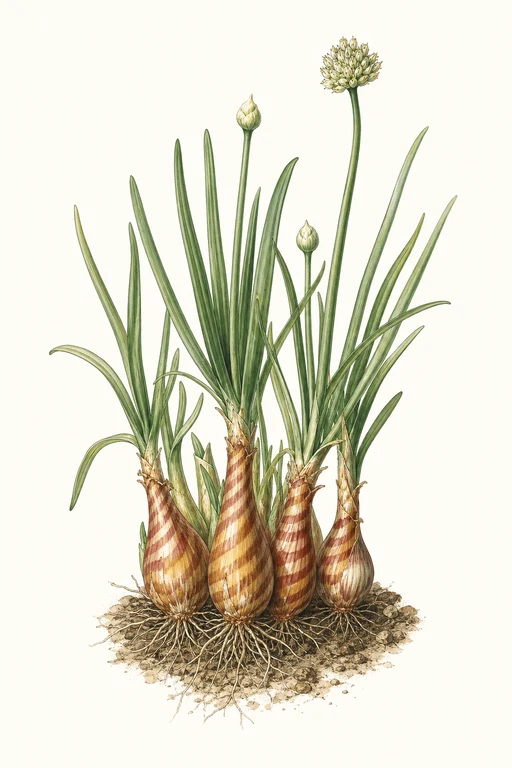
The bulbs mature in about 90 days with an eye-catching, elongated silhouette and distinctive “rattlesnake” striping—golden-brown skins over a pale, succulent interior. Grow them for fresh slicing, standout salads, and caramelizing-style sweetness in sauces and roasts, where their mild character shines.
Light: Full SunMaturity: 90 DaysHabit: Bulbing
Crop Dates : 2a
| Milestone | Date |
|---|---|
| Start Indoors | Direct Sow |
| Last Frost | May 25th |
| Transplant / Sow Outdoors | May 25th |
| Harvest Begins | Aug 23rd |
| Harvest Ends | Aug 29th |
Crop Details
| Trait | Value |
|---|---|
| Days to Maturity | 90 |
| Sun Requirements | Full Sun |
| Growth Habit | Bulbing |
| Support Needed | None |
| Planting Depth | Normal |
| Germination Temp (°F) | 70 |
| Min Soil Temp (°F) | 45 |
| Min Night Temp (°F) | 28 |
| Harden Off (days) | Not Required |
Culinary Notes

Chef's Note
Georgia Rattlesnake is the kind of sweet onion that tastes “alive” raw—juicy and crisp with a honeyed finish—so it earns its keep on tart greens and fatty cheeses. Cook low and steady: it sweetens without turning aggressive, giving you glossy, caramel-kissed slices and a smooth sauce base instead of sharp bite.

Best Uses
- fresh slicing on sandwiches where they won’t overwhelm—great raw crunch
- thin-grilling/roasting for caramelized-style sweetness in the edges
- quick pickling or salad use where their juice balances salt and fat
- slow reduction in pan sauces that need mild allium backbone, not sharpness

Flavor Profile

Kitchen Pairings
Frequently Asked Questions
What pest or disease most often affects Allium cepa (Georgia Rattlesnake onions), and how can I manage it?
How often should I water Georgia Rattlesnake onions during active growth?
How do I know when Georgia Rattlesnake onions are ready to harvest?
Sowing Tips

Transplant Conditions
Wait until soil reaches 45°F and nights stay above 28°F before moving outdoors.
Expert Note

Treat it like a true onion: transplant/set bulbs only when soil is workable and cool weather is stable, then avoid excessive nitrogen to keep bulbs forming.