
Georgia
Sink your senses into Georgia’s lush, tender leaves—cool, sweet-green with a gentle bite that feels velvety in the mouth.
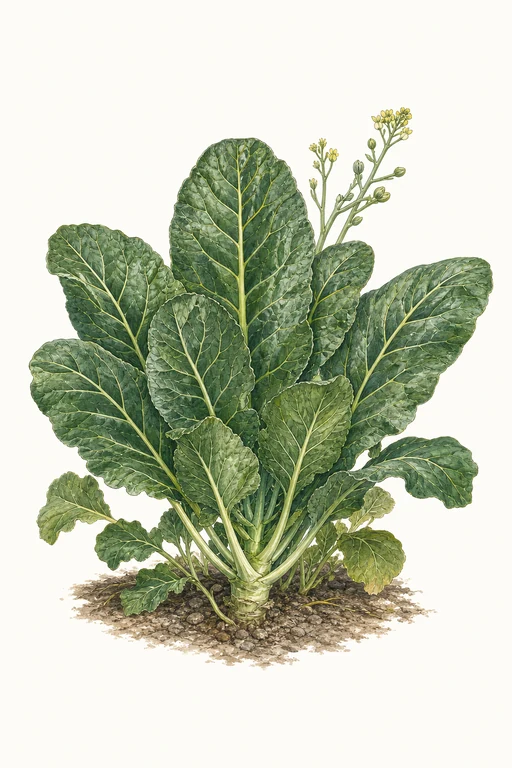
At maturity, plants form an upright rosette of broad, smooth-to-slightly crinkled foliage that turns reliably flavorful and satisfying at about 60 days. Ideal for hearty greens preparations, Georgia shines when simmered into savory dishes, folded into robust sauces, or preserved for later enjoyment through pickling-style tang.
Light: Full SunMaturity: 60 DaysHabit: Rosette
Planting schedules and alerts are optimized for Columbus (Zone 6b).
Crop Dates
| Milestone | Date |
|---|---|
| Start Indoors | Mar 28th |
| Last Frost | Apr 25th |
| Transplant / Sow Outdoors | Apr 18th |
| Harvest Begins | Jun 17th |
| Harvest Ends | Oct 16th |
Crop Details
| Trait | Value |
|---|---|
| Days to Maturity | 60 |
| Sun Requirements | Full Sun |
| Growth Habit | Rosette |
| Support Needed | None |
| Planting Depth | Normal |
| Germination Temp (°F) | 45 |
| Min Soil Temp (°F) | 45 |
| Min Night Temp (°F) | 35 |
| Harden Off (days) | 6 |
Culinary Notes

Chef's Note
Georgia’s leaves carry a gentle, velvety chew when cooked slowly—built for simmering until the bite turns silky. Use it where you want greens that stay substantial (not watery) and take kindly to smoke and acid.

Best Uses
- low-simmered collards with smoked fat until edges go tender
- blended into a thick, green-forward sauce for tossing with pasta
- braise and finish with acid for a clean, wake-up snap
- quick pickle-style tang for crisp, long-lasting greens

Flavor Profile

Kitchen Pairings
Frequently Asked Questions
What pest or disease most often affects Brassica oleracea (collards) like Georgia, and how can I control it?
How often should I water Brassica oleracea (Georgia collards) during its main growth phase?
How do I tell when Georgia collards (Brassica oleracea) are ready to harvest?
Sowing Tips

Transplant Conditions
Wait until soil reaches 45°F and nights stay above 35°F before moving outdoors. Harden off for 6 days first.
Expert Note

Start collards indoors early enough to establish roots, then transplant into cool soil and keep plants consistently watered for the sweetest leaf growth.