
German Chamomile
Aromas bloom first: German Chamomile fills the air with sweet, apple-like floral fragrance and a gentle, honeyed warmth.
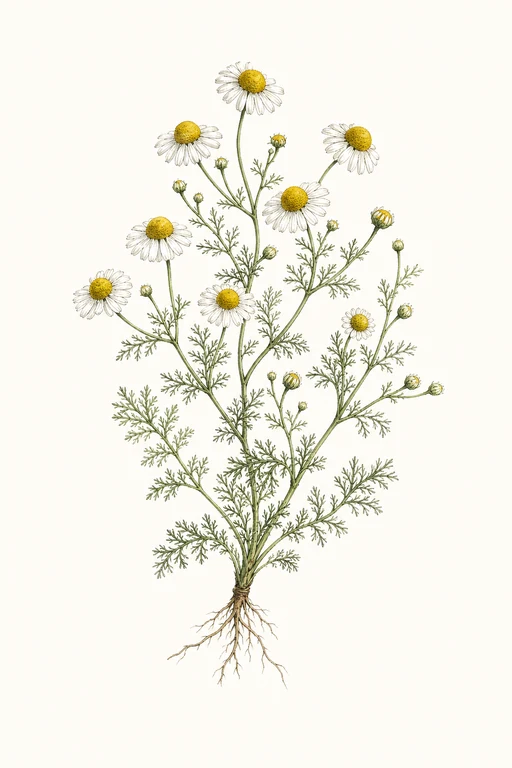
The delicate, daisy-like heads open to reveal crisp, feathery petals around a bright golden center, with a softly herbaceous flavor that feels light on the palate. Grow this 70-day herb for fragrant infusions and soothing herbal blends, and for drying to capture its sunny character for later use.
Light: Full SunMaturity: 70 DaysHabit: Upright
Planting schedules and alerts are optimized for Columbus (Zone 6b).
Crop Dates
| Milestone | Date |
|---|---|
| Start Indoors | Mar 28th |
| Last Frost | Apr 25th |
| Transplant / Sow Outdoors | Apr 25th |
| Harvest Begins | Jul 4th |
| Harvest Ends | Oct 16th |
Crop Details
| Trait | Value |
|---|---|
| Days to Maturity | 70 |
| Sun Requirements | Full Sun |
| Growth Habit | Upright |
| Support Needed | None |
| Planting Depth | Surface |
| Germination Temp (°F) | 70 |
| Min Soil Temp (°F) | 45 |
| Min Night Temp (°F) | 35 |
| Harden Off (days) | 7 |
Culinary Notes

Chef's Note
German Chamomile is built for aroma-forward drinks: steep it briefly so the honeyed, apple-floral character comes through without going bitter. Use it like a gentle perfume—best when warmed, where its golden head notes bloom cleanly.

Best Uses
- tea and cold-steep infusions using dried or fresh heads
- soothing herbal blends with other mild botanicals
- drying the blooms for later warm drinks and fragrant syrup/cordial accents
- infusing into custard or rice pudding base for a floral back-note

Flavor Profile

Kitchen Pairings
Frequently Asked Questions
What pest or disease most commonly affects Matricaria chamomilla (German chamomile), and how can I control it?
How often should I water Matricaria chamomilla during its main growing phase, and what soil moisture level is best?
How do I know when Matricaria chamomilla is ready to harvest?
Sowing Tips

Transplant Conditions
Wait until soil reaches 45°F and nights stay above 35°F before moving outdoors. Harden off for 7 days first.
Expert Note

For best flavor and flower production, keep seedlings evenly moist but don’t over-fertilize—chamomile likes leaner soil.