
German White
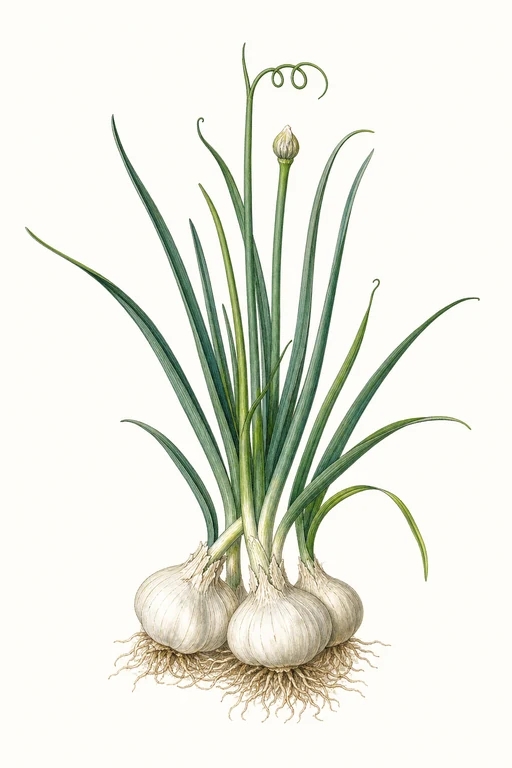
Fragrant and bold from the first peel, German White hardneck garlic fills the air with a clean, lingering pungency and a rich, savory depth.
The cloves are creamy-white and generously sized, with a firm, satiny texture that roasts into mellow sweetness while still carrying a distinct garlic snap. Grow German White for standout flavor in sauces, roasted preparations, and pickled specialties—an heirloom-worthy bulb that rewards patient gardeners with a dramatic harvest after about 210 days.
Light: Full SunMaturity: 210 DaysHabit: Bulbing
Location not set yet
Location not set yet
Enter your ZIP for local crop dates
German White Planting Dates by USDA Zone
Estimated US hardiness-zone windows for sow, transplant, and harvest. Enter a US ZIP above for exact local dates, or open a zone below.
| Zone | Start Indoors | Sow / Transplant | Harvest |
|---|---|---|---|
| Zone 1a | Protected Environment Only | ||
| Zone 1b | Protected Environment Only | ||
| Zone 2a | Protected Environment Only | ||
| Zone 2b | Protected Environment Only | ||
| Zone 3a | Protected Environment Only | ||
| Zone 3b | Protected Environment Only | ||
| Zone 4a | Protected Environment Only | ||
| Zone 4b | Protected Environment Only | ||
| Zone 5a | Protected Environment Only | ||
| Zone 5b | Protected Environment Only | ||
| Zone 6a | Protected Environment Only | ||
| Zone 6b | Protected Environment Only | ||
| Zone 7a | Protected Environment Only | ||
| Zone 7b | Protected Environment Only | ||
| Zone 8a | Direct Sow | Jan 21st | Aug 19th – Nov 5th |
| Zone 8b | Direct Sow | Jan 12th | Aug 10th – Nov 12th |
| Zone 9a | Direct Sow | Dec 26th | Jul 24th – Nov 26th |
| Zone 9b | Direct Sow | Dec 1st | Jun 29th – Dec 9th |
| Zone 10a | — | Oct 1st | Feb 28th – Feb 28th |
| Zone 10b | — | Oct 1st | Feb 28th – Feb 28th |
| Zone 11a | — | Oct 1st | Feb 28th – Feb 28th |
| Zone 11b | — | Oct 1st | Feb 28th – Feb 28th |
| Zone 12a | — | Oct 1st | Feb 28th – Feb 28th |
| Zone 12b | — | Oct 1st | Feb 28th – Feb 28th |
| Zone 13a | — | Oct 1st | Feb 28th – Feb 28th |
| Zone 13b | — | Oct 1st | Feb 28th – Feb 28th |
Crop Details
| Trait | Value |
|---|---|
| Days to Maturity | 210 |
| Sun Requirements | Full Sun |
| Growth Habit | Bulbing |
| Support Needed | None |
| Planting Depth | Normal |
| Germination Temp (°F) | 50 |
| Min Soil Temp (°F) | 40 |
| Min Night Temp (°F) | 28 |
| Harden Off (days) | Not Required |
Culinary Notes

Chef's Note
German White hardneck has that first-peel aromatic hit plus a satiny clove that roasts into mellow sweetness without losing its garlic backbone. It’s built for heat and for preserving—roast it and it turns silky, or pickle it and the pungency stays lively and bright instead of turning dull.

Best Uses
- slow-roasted whole bulb until spoonable and silky
- garlic-forward sauces that start in oil and finish with a velvety mash
- quick-pickled cloves for briny, punchy snacking
- chopped raw in gremolata-style mixes for a bright bite

Flavor Profile

Kitchen Pairings
Frequently Asked Questions
What pest or disease commonly affects Allium sativum (garlic), and how can I manage it?
How often should I water Allium sativum during the main growing phase?
How do I know when Allium sativum (German Extra Hardy garlic) is ready to harvest?
Sowing Tips

Transplant Conditions
Wait until soil reaches 40°F and nights stay above 28°F before moving outdoors.
Expert Note

Plant hardneck garlic cloves in fall with the pointed end up, then mulch heavily to protect crowns through winter for best bulb size and storage.