
Giant Chabaud Enfant De Nice
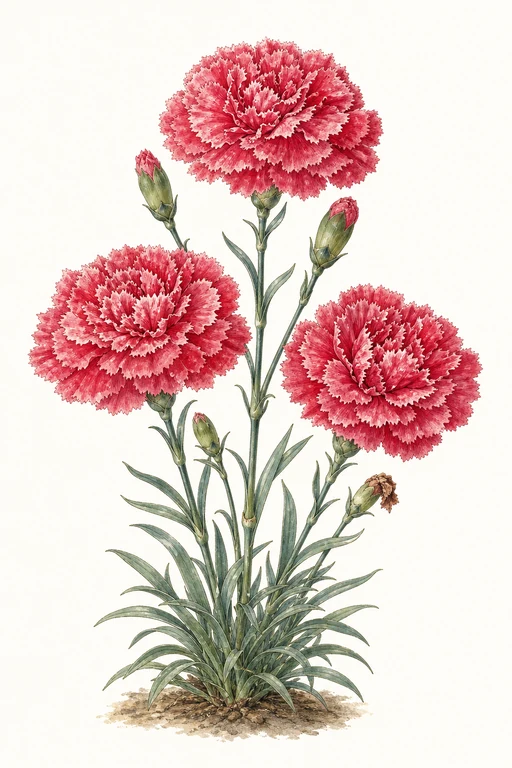
Fragrant, ruffled blooms unfurl in abundance—each petal edged like fine lace, carrying a luminous glow that feels almost candlelit in the garden.
Giant Chabaud Enfant De Nice forms sturdy, upright stems that hold their showy character through the season, with a richly textured surface and a classic carnation presence that’s equally striking in beds and borders or as a long-lasting cut. Grow it for its grand, celebratory flowers and dependable perennial performance, then enjoy the way it turns every sunny corner into a living bouquet.
Light: Full SunMaturity: 120 DaysHabit: Upright
Location not set yet
Location not set yet
Enter your ZIP for local crop dates
Giant Chabaud Enfant De Nice Planting Dates by USDA Zone
Estimated US hardiness-zone windows for sow, transplant, and harvest. Enter a US ZIP above for exact local dates, or open a zone below.
| Zone | Start Indoors | Sow / Transplant | Harvest |
|---|---|---|---|
| Zone 1a | Apr 6th | Jun 8th | Oct 6th – Jul 15th |
| Zone 1b | Mar 23rd | May 25th | Sep 22nd – Aug 1st |
| Zone 2a | Mar 16th | May 18th | Sep 15th – Aug 29th |
| Zone 2b | Mar 6th | May 8th | Sep 5th – Aug 25th |
| Zone 3a | Mar 6th | May 8th | Sep 5th – Sep 1st |
| Zone 3b | Mar 10th | May 12th | Sep 9th – Sep 21st |
| Zone 4a | Mar 6th | May 8th | Sep 5th – Sep 24th |
| Zone 4b | Mar 4th | May 6th | Sep 3rd – Sep 27th |
| Zone 5a | Feb 27th | May 1st | Aug 29th – Sep 30th |
| Zone 5b | Feb 23rd | Apr 27th | Aug 25th – Oct 5th |
| Zone 6a | Feb 20th | Apr 24th | Aug 22nd – Oct 10th |
| Zone 6b | Feb 14th | Apr 18th | Aug 16th – Oct 16th |
| Zone 7a | Feb 9th | Apr 13th | Aug 11th – Oct 20th |
| Zone 7b | Jan 30th | Apr 3rd | Aug 1st – Oct 28th |
| Zone 8a | Jan 21st | Mar 25th | Jul 23rd – Nov 5th |
| Zone 8b | Jan 12th | Mar 16th | Jul 14th – Nov 12th |
| Zone 9a | Dec 26th | Feb 27th | Jun 27th – Nov 26th |
| Zone 9b | Dec 1st | Feb 2nd | Jun 2nd – Dec 9th |
| Zone 10a | — | Oct 1st | Jan 29th – Feb 28th |
| Zone 10b | — | Oct 1st | Jan 29th – Feb 28th |
| Zone 11a | — | Oct 1st | Jan 29th – Feb 28th |
| Zone 11b | — | Oct 1st | Jan 29th – Feb 28th |
| Zone 12a | — | Oct 1st | Jan 29th – Feb 28th |
| Zone 12b | — | Oct 1st | Jan 29th – Feb 28th |
| Zone 13a | — | Oct 1st | Jan 29th – Feb 28th |
| Zone 13b | — | Oct 1st | Jan 29th – Feb 28th |
Crop Details
| Trait | Value |
|---|---|
| Days to Maturity | 120 |
| Sun Requirements | Full Sun |
| Growth Habit | Upright |
| Support Needed | Stake |
| Planting Depth | Normal |
| Germination Temp (°F) | 65 |
| Min Soil Temp (°F) | 45 |
| Min Night Temp (°F) | 35 |
| Harden Off (days) | 7 |
Culinary Notes

Chef's Note
Even though it’s a carnation, this type leans strongly aromatic—use the petals like a delicate spice: steep for scent or sugar for a clean crunch. Keep it light on sweetness so the clove-tinged perfume doesn’t take over.

Best Uses
- crystalized or sugared petals for cake and pastry garnish
- infuse milk or cream for floral-scented custards and ice cream
- tear fresh petals into fruit salads and summer drinks for perfumed color
- steep petals into syrups for cocktails or panna cotta

Flavor Profile

Kitchen Pairings
Frequently Asked Questions
What’s the most common disease problem for Dianthus caryophyllus (carnations) like Giant Chabaud, and how do I prevent it?
How often should I water Dianthus caryophyllus during peak growth (roughly weeks 4–10) to keep it healthy?
How can I tell when Giant Chabaud Enfant De Nice (Dianthus caryophyllus) is ready to harvest?
Sowing Tips

Transplant Conditions
Wait until soil reaches 45°F and nights stay above 35°F before moving outdoors. Harden off for 7 days first.
Expert Note

Start indoors early for the best bloom timeline, then transplant once nights are consistently mild and plants have a strong root system.