
Giant Musselburgh
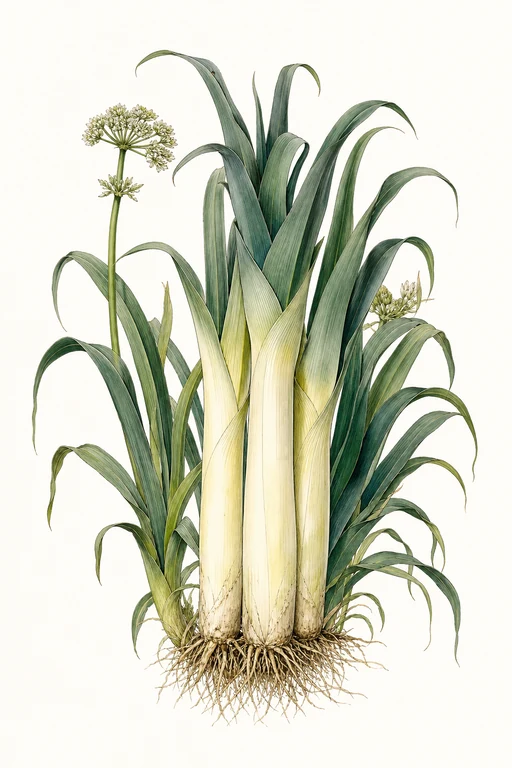
Sweet, mild, and richly aromatic—Giant Musselburgh leeks unfurl into long, tender stalks with a creamy, pale core that feels silky between the fingers.
Expect a substantial, upright growth habit and a satisfying bite that turns beautifully mellow when roasted or simmered, making them a standout for hearty dishes and elegant sauces. A classic market-class choice for gardeners who love dependable performance and impressive size at 120 days.
Light: Full SunMaturity: 120 DaysHabit: Upright
Crop Dates : 3b
| Milestone | Date |
|---|---|
| Start Indoors | Mar 10th |
| Last Frost | May 19th |
| Transplant / Sow Outdoors | May 19th |
| Harvest Begins | Sep 16th |
| Harvest Ends | Sep 21st |
Crop Details
| Trait | Value |
|---|---|
| Days to Maturity | 120 |
| Sun Requirements | Full Sun |
| Growth Habit | Upright |
| Support Needed | None |
| Planting Depth | Normal |
| Germination Temp (°F) | 70 |
| Min Soil Temp (°F) | 45 |
| Min Night Temp (°F) | 35 |
| Harden Off (days) | 7 |
Culinary Notes

Chef's Note
Giant Musselburgh leeks lean sweet and mellow rather than sharp, with a silken core that stays luxurious even as the outer layers soften. Roast or simmer them and they collapse into that creamy, savory-sweet texture that binds beautifully with butter, dairy, and wine.

Best Uses
- slow-roasted leek halves until jammy at the edges
- simmered soup base for creamy purees and smooth consommé-style broths
- sautéed leeks as the backbone for rich tarts and gratins
- braised leek rounds in butter until silk-soft for side dishes

Flavor Profile

Kitchen Pairings
Frequently Asked Questions
What pest or disease is most common on Allium porrum (giant leek) and how do I control it?
How often should I water Allium porrum during the main growing phase?
How can I tell when Giant Musselburgh leeks are ready to harvest?
Sowing Tips

Transplant Conditions
Wait until soil reaches 45°F and nights stay above 35°F before moving outdoors. Harden off for 7 days first.
Expert Note

For Giant Musselburgh, transplant when seedlings are pencil-thick and keep the base repeatedly earthed up to build long white shanks.