
Gold Coin
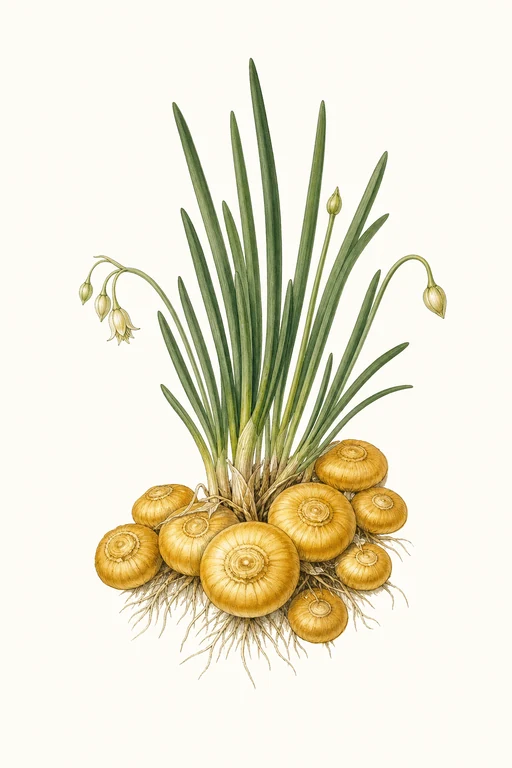
Sweet, golden bulbs with a delicate, honeyed aroma—Gold Coin Cipollini onions form perfectly round “coin” shapes that feel satiny in the hand and roast up tenderly with a mellow depth.
The flesh is crisp yet yielding, with a gentle bite that shines in fresh slices and shines again when caramelized for rich, glossy sauces. Grow Gold Coin for a harvest that’s as beautiful on the counter as it is inspiring in the garden at 90 days.
Light: Full SunMaturity: 90 DaysHabit: Bulbing
Crop Dates : 7a
| Milestone | Date |
|---|---|
| Start Indoors | Feb 23rd |
| Last Frost | Apr 20th |
| Transplant / Sow Outdoors | Apr 20th |
| Harvest Begins | Jul 19th |
| Harvest Ends | Oct 20th |
Crop Details
| Trait | Value |
|---|---|
| Days to Maturity | 90 |
| Sun Requirements | Full Sun |
| Growth Habit | Bulbing |
| Support Needed | None |
| Planting Depth | Normal |
| Germination Temp (°F) | 70 |
| Min Soil Temp (°F) | 40 |
| Min Night Temp (°F) | 28 |
| Harden Off (days) | 7 |
Culinary Notes

Chef's Note
Gold Coin Cipollini onions are built for the sweet spot: a gentle bite raw that doesn’t bully your palate, then turns silky and glossy when caramelized. Use them where you want visible rounds or tidy layers—roasting and reduction give you that honeyed, mellow depth without bitterness.

Best Uses
- thin, fresh slices on top of rich fats (they stay snappy instead of going harsh)
- carmelized whole or sliced for a glossy, jammy finish that coats whatever it touches
- roasting until the layers slump—sweet edges, tender center
- slow-simmered onion sauce where they melt down clean without turning bitter

Flavor Profile

Kitchen Pairings
Frequently Asked Questions
What pest or disease commonly affects Allium cepa (gold coin cipollini onions), and what should I do?
How often should I water Allium cepa during the main growing phase (bulb filling)?
How can I tell when gold coin cipollini onions (Allium cepa) are ready to harvest?
Sowing Tips

Transplant Conditions
Wait until soil reaches 40°F and nights stay above 28°F before moving outdoors. Harden off for 7 days first.
Expert Note

For sweet cipollini-type onions, keep soil evenly moist early and avoid nitrogen excess so bulbs size up without getting pungent.