
Golden Giant Amaranth
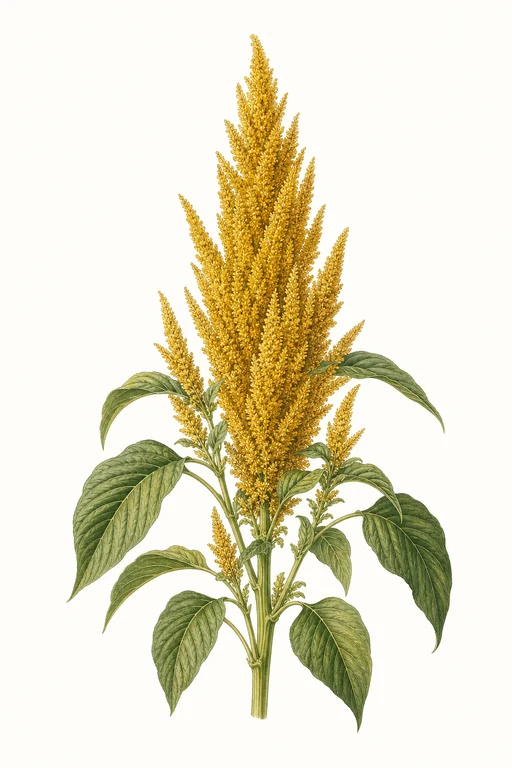
Bask in the sunlit glow of Golden Giant Amaranth, where towering, golden plumes shimmer with a warm, honeyed allure.
The grain forms in dense, upright panicles, offering a pleasantly nutty, gently earthy flavor and a satisfying, hearty texture that holds its character beautifully. Ideal for grain use—perfect for making wholesome amaranth preparations and for adding golden depth to everyday pantry staples.
Light: Full SunMaturity: 90 DaysHabit: Upright
Planting schedules and alerts are optimized for Columbus (Zone 6b).
Crop Dates
| Milestone | Date |
|---|---|
| Start Indoors | Direct Sow |
| Last Frost | Apr 25th |
| Transplant / Sow Outdoors | Apr 25th |
| Harvest Begins | Jul 24th |
| Harvest Ends | Oct 16th |
Crop Details
| Trait | Value |
|---|---|
| Days to Maturity | 90 |
| Sun Requirements | Full Sun |
| Growth Habit | Upright |
| Support Needed | None |
| Planting Depth | Normal |
| Germination Temp (°F) | 70 |
| Min Soil Temp (°F) | 60 |
| Min Night Temp (°F) | 50 |
| Harden Off (days) | Not Required |
Culinary Notes

Chef's Note
Golden Giant Amaranth cooks up with a buoyant, never-mushy texture and a clean, toasted-nut profile that doesn’t taste grainy once you treat it like a real starch. It’s at its best when you either toast it first for crunch or simmer it until it turns creamy around a springy core.

Best Uses
- cooked like porridge with milk or coconut for a creamy, spoon-coating texture
- hot grain bowls where it needs to hold up to vinaigrette or a warm sauce
- toasted amaranth for crunchy granola mixes and toppings
- steaming and using as a base for grain salads—chill it so it firms up

Flavor Profile

Kitchen Pairings
Frequently Asked Questions
What pest or disease problem most often affects Amaranthus cruentus (Golden Giant amaranth), and how can I manage it?
How often should I water Golden Giant amaranth during its main growing phase?
How do I tell when Golden Giant amaranth (Amaranthus cruentus) is ready to harvest?
Sowing Tips

Transplant Conditions
Wait until soil reaches 60°F and nights stay above 50°F before moving outdoors.
Expert Note

For best stands, keep the seedbed consistently moist until seedlings emerge, then thin to final spacing once plants are established.